CycleOps Trainer

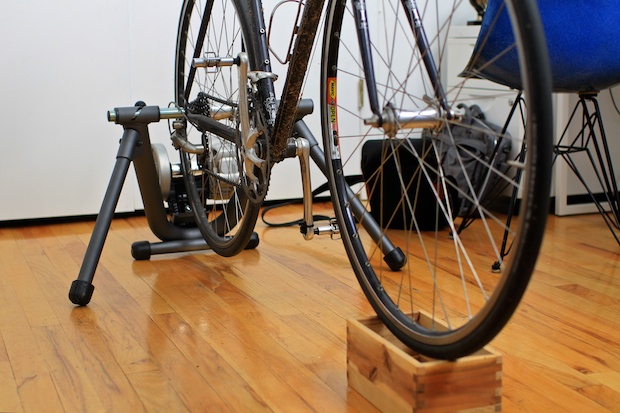
I picked up this CycleOps fluid trainer in late November. It took me a while to get used to riding indoors. The technique is so different that takes some time getting used to it. There are so many advantages to indoor training that make up for its awkwardness; controlled intervals, shorter workouts, less wear on your bike. However, it's not without its faults, chiefly staring at a wall for two hours, yet somehow I think even that's essential for endurance racing; mental endurance.

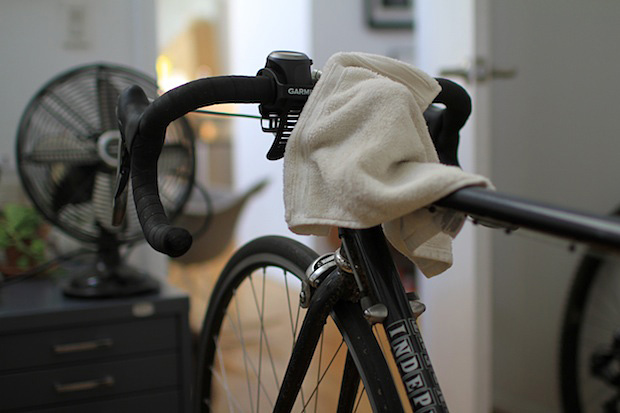
One of the major issues with training indoors is staying cool. It's easy to overheat since you're not fighting the wind anymore, which naturally moderates your body temperature. I have a huge fan at full blast pointed at me for this reason. Because you sweat more I often wear a sweat-band and have a towel draped over the handlebars/top tube of my bike.

Resistance is also different in that you no longer have gravity to fight against. As a result, workouts seem way harder since you're no longer coasting and pedaling to maintain speed the same way. You have to pedal constantly, which is great for developing pedaling technique.

I've also noticed that it's harder to maintain and reach certain heart rate zones without feeling completely obliterated. I'm not sure why this happens, but maybe it's because the amount of resistance is refocused to leg work since your body doesn't have to work as hard to keep up. This actually got better as I continued to use the trainer in my workouts.

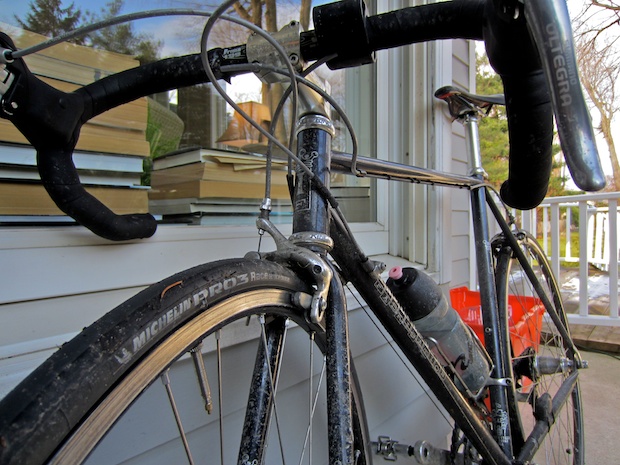
The yellow tab is the resistance adjuster. It modulates how much pressure the roller has against the tire. I had mine set up with too much pressure/resistance. I eventually dialed it back so that the easiest gear on my bike was easy, maintaining constant pressure without spinning out.

Compared to a wind and magnetic trainer it provides more natural feeling resistance without the noise. I was curious about rollers, but needed to find something that was portable. This model folds up and packs away easily into our closet.

A wooden planter's box does the job of making the setup level and secure. A few books or a phone book can do the trick, too. CycleOps sells a wheel stabilizer/lifter, but I don't think it's that necessary.

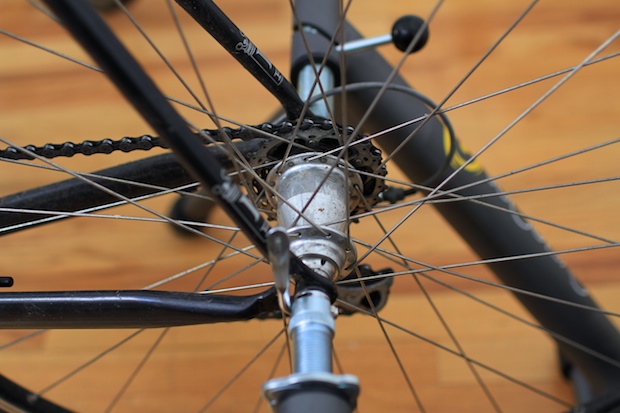
Attaching the bike is quick and easy once you set up spacing correctly. There's a quick release lever on the opposite side that's designed to stay secure even if you're standing up and mashing on the pedals. The entire unit feels solidly built and has the weight to prove it.

Now, towards the latter half of December, I feel pretty comfortable in putting in miles when the weather turns for the worse. No more excuses.

8 Mile

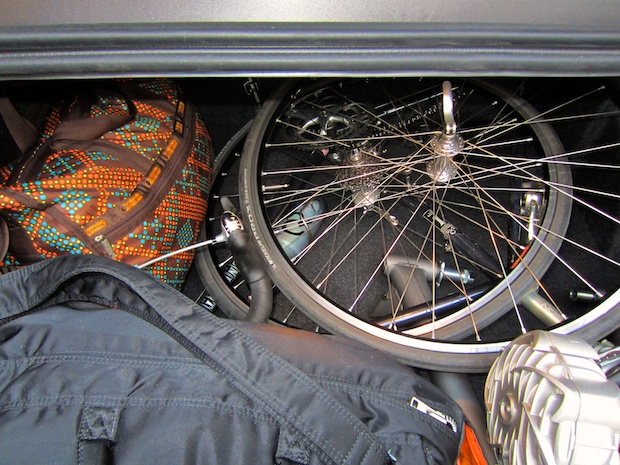
We're here in Grosse Pointe, Michigan for the holidays. We opted to drive instead of fly this year. It took us a total of 10 hours to get here. We covered roughly 700 miles and traveled through four states. We rented a car and packed it full of presents, our dog, Marlow, along with my bike and trainer.

It's the first time in a long time that I brought a bike on a trip. Fortunately we pack light, but it was a tight squeeze.

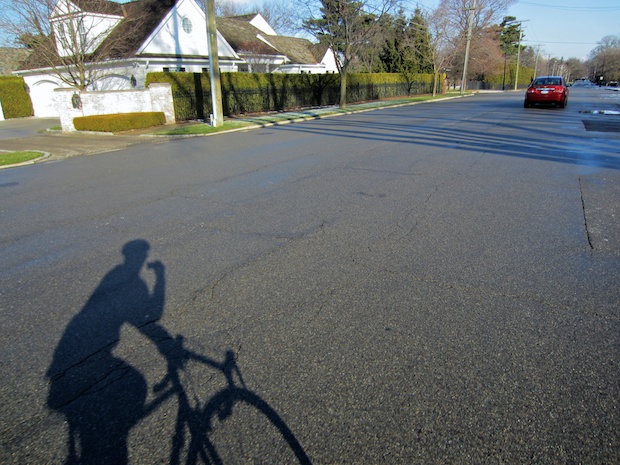
I woke up to a slight dusting of snow on the ground, only to melt by mid afternoon. It was 28º when I hit the road, which was freshly salted and wet. So glad I brought along my shoe covers.

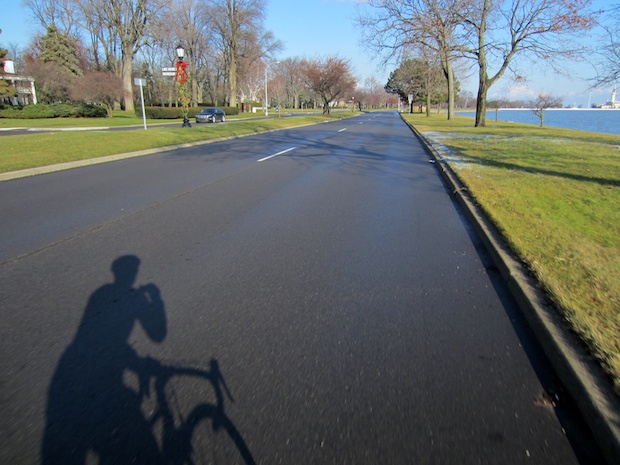
I rode along Lake St. Claire, which divides the US and Canada, on Lake Shore Road. It's lined with mega-million dollar homes of the Ford Family. The lake is beautiful since it looks like the sea. It goes on forever without seeing the other side. The sun came out long enough for me to enjoy the afternoon, setting at a blistering 22 mph pace.

It only stretches for a few miles north till it cuts into the suburbs of Grosse Pointe Farms. I'll try going south next time and see if I can make it all the way to Detroit and back alive.

After 25 miles I was thoroughly covered in a salt residue. Not good for your bike, especially if it's made from steel. It's kind of like liquid sand paper, and will eat away your drivetrain in no time. I should have brought a heavier chain lubricant.

‎"When the spirits are low, when the day appears dark, when work becomes monotonous, when hope hardly seems worth having, just mount a bicycle and go out for a spin down the road, without thought on anything but the ride you are taking."

Arthur Conan Doyle

Winter Ride Redux

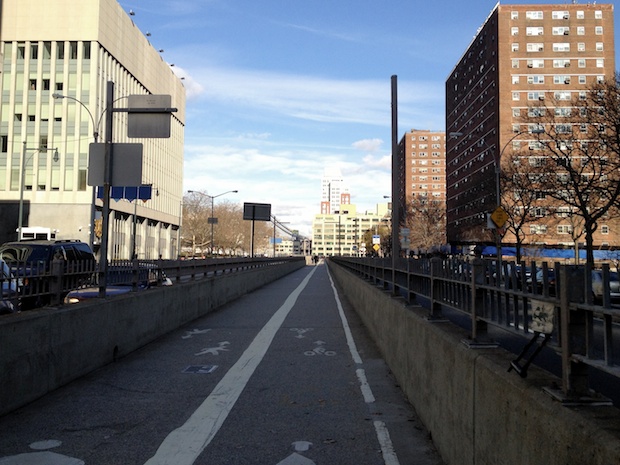
The day after my ride along the Hudson River I drove up with my wife, sister-in-law and a friend to Piermont to visit some family friends, almost on the very same route. It was really cool to get an idea how far I've ridden on my own. I snapped the picture above just as we got turned around off the George Washington Bridge onramp. For years I got confused as to which direction was north and south coming out from the subway. There aren't many landmarks to help orientate oneself. I used to use the Chrysler building and Empire State Building, but they're often obscured by other random tall buildings. Eventually, you just know, but it takes some time.

I think cycling is the best way to get to know any city. You remember shortcuts and which streets are one-way or the wrong way. The subway has this ability to make a relatively dense city even more of an epic sprawl. Once you've ridden through connecting neighborhoods you begin to connect the dots, and the city doesn't seem as big as it used to be.

On our drive I could connect those dots quite easily. There's the bridge, and there's the Hudson River Greenway. Oh, now we're at the bridge and just over there is Henry Hudson Drive. I could replay and fast forward the entire route in my head.

A Too Many Bikes Solution

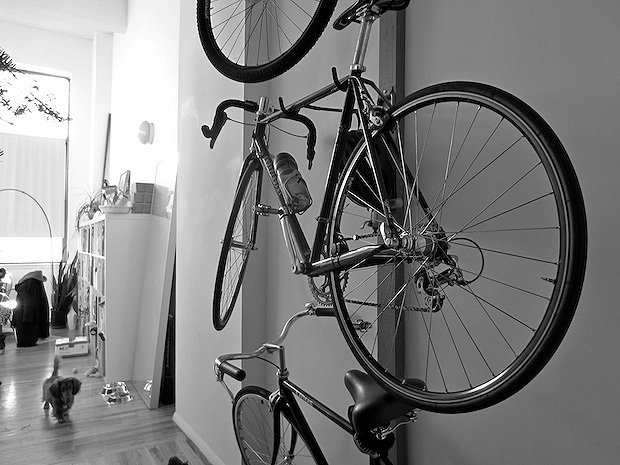
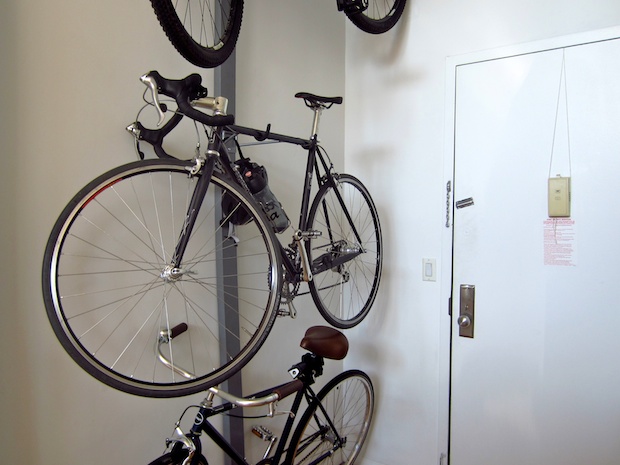
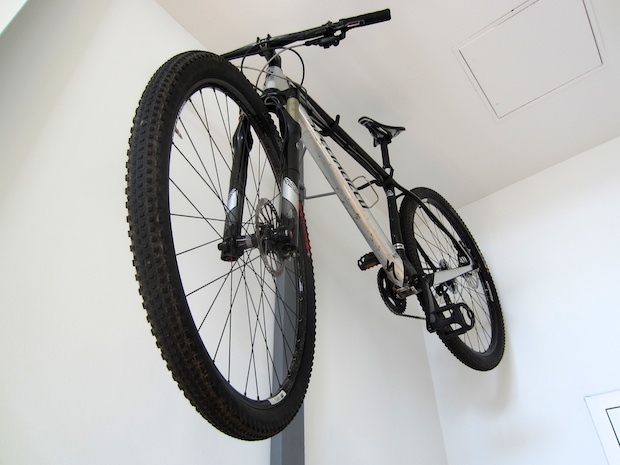
I don't know how it happened, but we now have four bikes between the two of us, three of which belong to me. Fortunately, we have really tall ceilings, but the offerings of decent looking wall mounts for bikes is very slim. So I decided to make my own. The result is quite nice and pretty inexpensive.

I picked a long 2"x4"x8' plank I picked up from Lowes, which happens to be a few blocks away, and bought these brackets on Amazon but in grey. I picked up a small quart of matching paint and painted the 2"x4". This step made all the difference in aesthetics. Since all the weight is distributed along the entire length of the 2"x4" all I need to do was secure it flat against the wall and bolt the mounts onto the plank. I used elfa wall anchors from The Container Store which do a great job without much worry of pulling out of the drywall. My last wall mount came crashing down, putting a nice big dent in my road bike. Luckily the frame is made from steel, and dents like that add character, so I tell myself.

The hardest part of the whole project was figuring out exactly where to put the mounts. We have enough height to stack three bikes, one way up high, in the middle and the last leaning against the wall. The only drawback is that the bike up the top is a bit high to reach without a stool or chair. I also picked up some hooks for hanging helmets and locks. The end result is something quite minimal and modern.

Leadville 100 Qualifier

The Leadville 100 qualifying races were announced the other day. Even though I won a lottery that automatically places me at the start line of the race, I'm determined to officially qualify at the Wilmington Whiteface 100 in Wilmington, NY on June 17.

The course features 62% fire/jeep roads, 34% paved, and 4% single track and about 6500 ft climbing over 57 miles (100k). I think with all the training I'm doing on my road bike I'll definitely be in shape for this. Check out the course map and profile here.

They only have 100 qualifying slots based on performance with a cap of 1000 racers per race. That means only 10% of the top finishers make it into the Leadville 100. They added more qualifying races this year so chances are better if you do poorly in any one race.

Jersey Contents

On any given ride I'll try to take the least amount of stuff in my jersey/jacket pockets. Above are my go-to items. On longer mountain bike rides, especially if it's hot, I'll bring along my CamelBak Lobo, and pack it full of food and the all important 8-hour bug spray. The Northeast has some of the worst bogs and consequently the biggest mosquitos I've ever seen. See what I bring after the break.

Topeak Race Rocket It's super compact, with an extendable hose, which makes pumping a lot easier. It's Presta and Schrader valve compatible. It also goes up to high pressure in no time at all. Great design.

Park Multi Tool Has just about everything you'd need for minor to reasonably major repairs. It features a chain tool, tire lever, spoke and hex wrenches. I'm only complaint is that the 8mm hex bit falls off from time to time.

Park Super Patch No glue, or waiting, and reliable most of the time.

Rapha Essentials Case Good for keeping wallet items dry including my iPhone.

Bicycle Permit It costs $5 for life, and allows you to bring your bike aboard Metro North and Long Island Rail Road.

Cash Even $1 can save you on any given ride. I can usually buy either a Snickers bar or 3 bananas.

iPhone

iPod Shuffle Good for training rides around the park. I normally don't listen to music on long rides. I think it's dangerous. The park is fine since there are fewer distractions to be mindful of.

Canon PowerShot Elph 300HS Great little camera that's easy to handle while riding.

Garmin Forerunner 405 While technically it doesn't live inside my pocket, it's as essential to me as a helmet. Here's a previous post about the watch.

Real Wheels

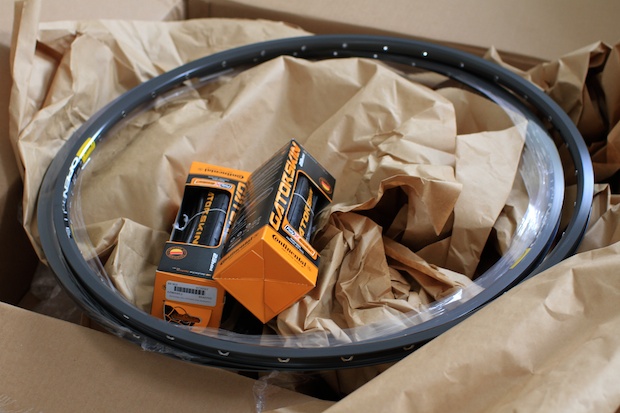
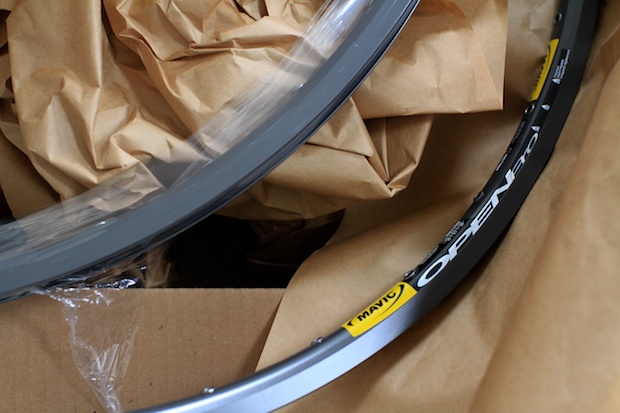
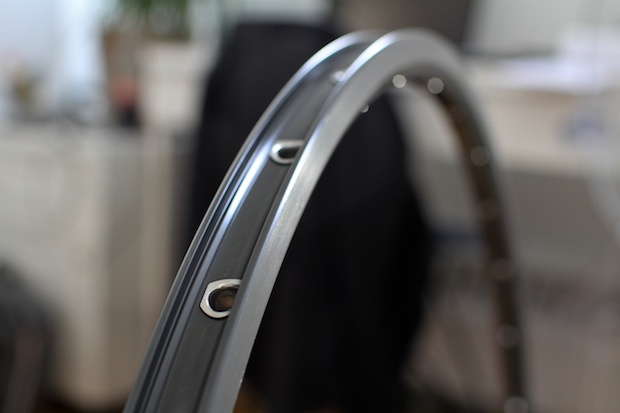
I just got my new Mavic Open Pro rims in the mail the other day. These feature the Couche Dure micro hardening process for more durability and better brake wear. I've been on my original Open Pro's for close to ten years now without a hitch. I hand-built them myself, paired with Chris King's Classic hubs and DT Swiss double butted spokes with alloy nipples.

It's been so long since I've built up a pair of wheels, even though this is a simple rim swap. I own a truing stand, but it's Park's Home Mechanic economy model. I don't own a dishing tool or a tensiometer, but I think I'll get by. Luckily one of my neighbors has a plethora of tools I can borrow.

I also got some new tires, tubes and brake pads.

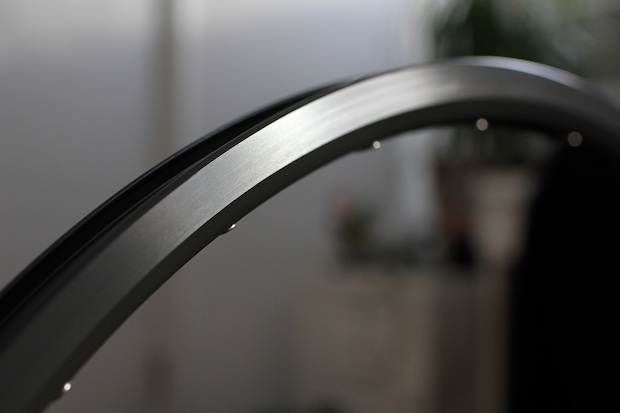
The Open Pros have a gorgeous machined sidewall.

Reinforced spoke eyelets.

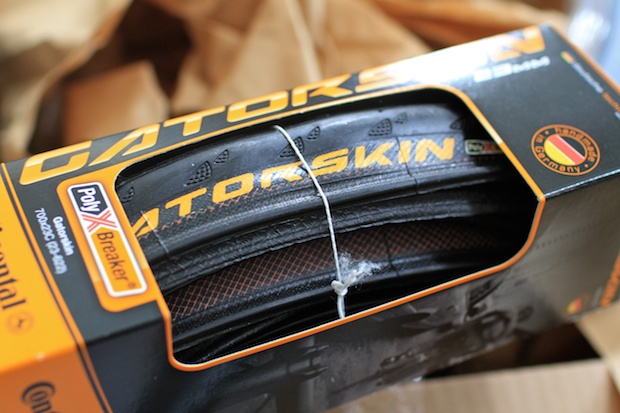
Gatorskin tires from Continental are made in Germany, and are supposed to be really durable. My Michelin Pros are tried and true, but just don't hold up to the nasty streets of New York.

I don't know when I'll be able to build these up. We're heading out-of-town for the holidays, and I'm bringing my bike with me along with my trainer. I'd rather risk riding my old wheels for just a week more than have no wheels at all. I'll let you know how it goes.

Winter Saturday Ride

What was supposed to be a leisurely Saturday morning ride around the neighborhood turned into an epic 50+ mile out-and-back ride up the Hudson River (sorry Nate and Martín). I checked the temperature outside right before I went out, and it was a cool 34°. As soon as I started I was feeling pretty good, despite having a bit too much to drink at last night's holiday party. I couldn't bring myself to stop with the sun shining with the invigorating cold air. So I kept going.

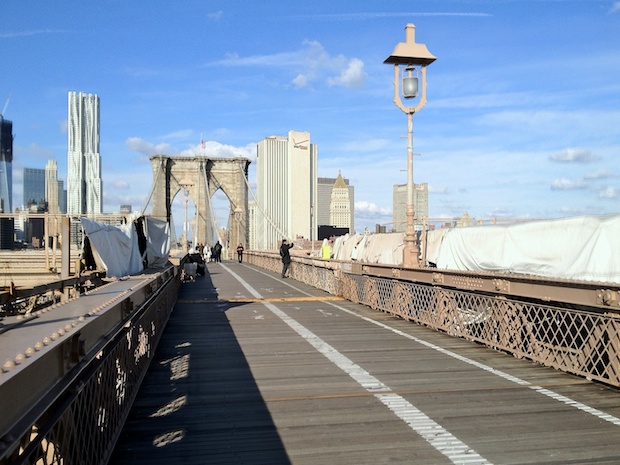
I started off across the Brooklyn Bridge. The path entrance is less than two miles from where we live. The Manhattan Bridge  is also accessible and close by.

What you'd think would be a great part of the ride is actually not, unless you stop to take in the sweeping view of Manhattan. Most of your attention is paid closely to the never-ending stream of tourists. I get it. It's probably the best view of the city, but it's freezing cold in December. At least it's not as bad as in the summer. I avoid it completely, and take the Manhattan Bridge instead.

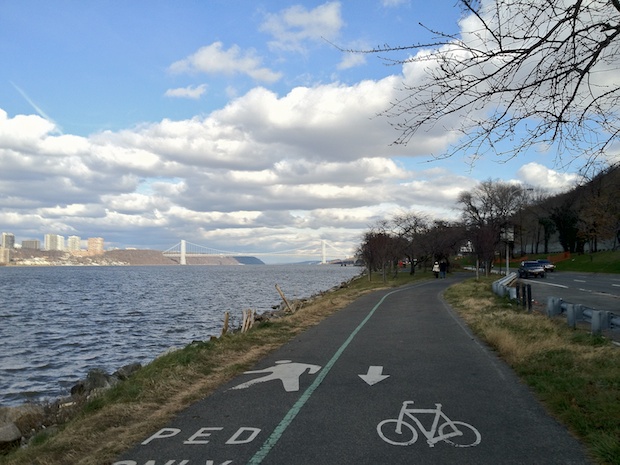
Once you cut through the narrow slice of downtown Manhattan you're on the Hudson River Greenway, which runs parallel to the west side of Manhattan. While not my favorite path due to the heavy pedestrian and cycling traffic, it does offer a safe and straight-shot all the way up to the top of the island. Past Harlem and Hamilton Heights the path begins to really open up to some great views. Out in the distance is my goal, the George Washington Bridge, and beyond, the Palisades.

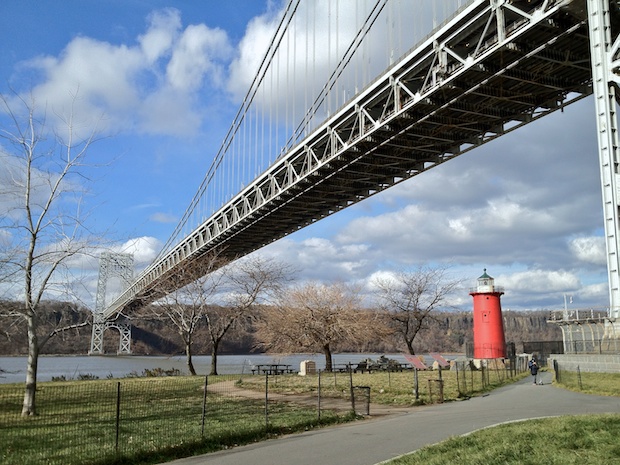
Underneath George Washington Bridge. It took me a while to figure out exactly where I needed to go in order to get onto the bridge. It's a rather steep, but short climb into Washington Heights, but if you follow the signs it'll take you to the very obscured pathway entrance.

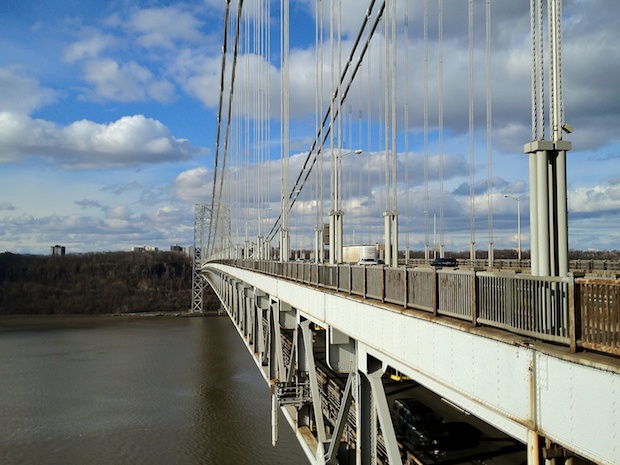
Crossing the Hudson and into… Jersey, baby!

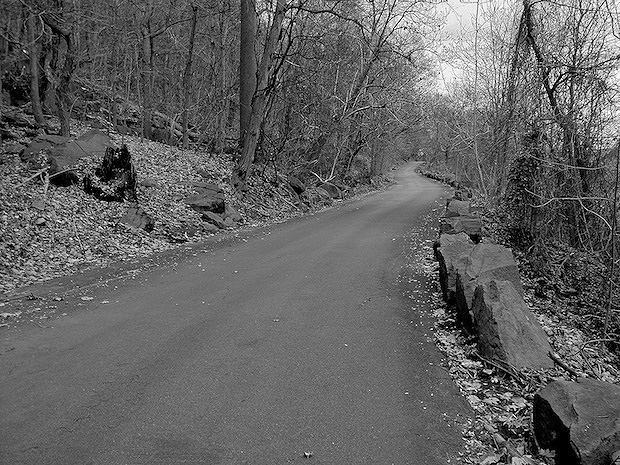
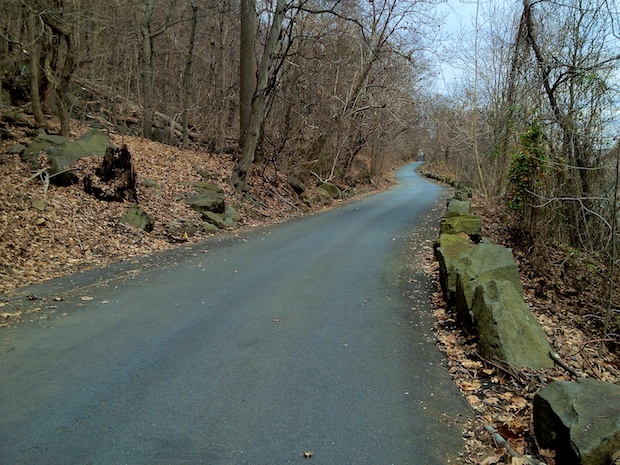
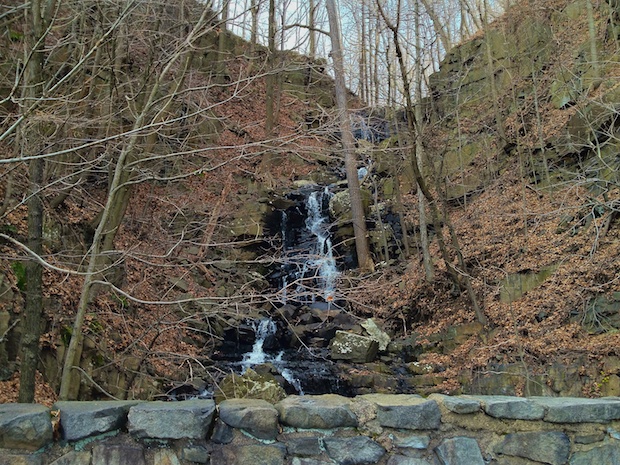
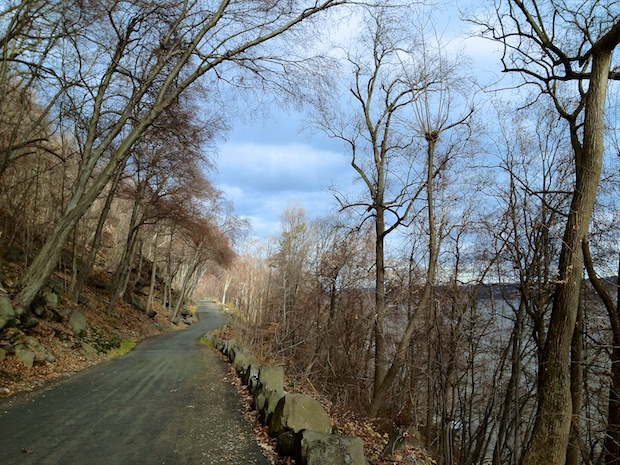
Mile 25 Immediately after the bridge it's a sharp left and down a steep road onto Henry Hudson Drive. This is what makes the ride so good. While cars are allowed on the road you typically don't see that many. It feels like you're out in the country. It runs alongside the Englewood cliffs and is lined with trees for the entire 8 mile stretch, parts of which are completely closed off to cars. It has some decent climbs and descents, which remind me of the Pacific Northwest.

I passed a few groups on my way up, but almost got passed by a guy on a blacked-out Pinarello Dogma. Almost. Even Lance Armstrong has been sighted on this route from time to time, which goes to show that this is some serious training ground.

I brought my Canon Elph with me, but forgot to put a memory card in it. All these shots were taken with my iPhone 4S, which already has a great new lens and sensor. Unfortunately I had it on the HDR setting; I usually snap pictures as I'm riding so half of my shots had this double exposure thing happening.

Mile 25-55 It's an out-and-back ride, but with hills it's so different in that the saying 'what goes up must come down' applies in reverse, to your detriment, 'what goes down must come up'. Luckily it's short enough to conquer, but not long enough to feel like you're king of the mountains.

This is one of those surprising rides you'd never think would exist just outside of New York City, but it  does. Because it's tucked along a cliff side with a wide river next to you the noises of cars and the city are completely drowned out by falling leaves, the wind passing over your ears, and steady breathing.

Just above the cliffs is another popular route, 9W, which I've ridden, 60 miles one way to Bear Mountain and back, with a total mileage of 120 miles. The most I've ever ridden in a single day. 9W features a nice wide shoulder and doesn't have as much climbing, but it takes you through some nice upstate New York scenery. I'll save that ride for a future post.

What Did I Get Myself Into?

Here's a trailer for Race Across The Sky, the 2009 Leadville 100 documentary, featuring six-time champion, Dave Weins, and seven-time Tour de France winner, Lance Armstrong. If these guys suffered how am I going to survive? I definitely need to get my support team in order to force feed me. Anybody interested in helping me in Colorado this August?

Blast from the Past

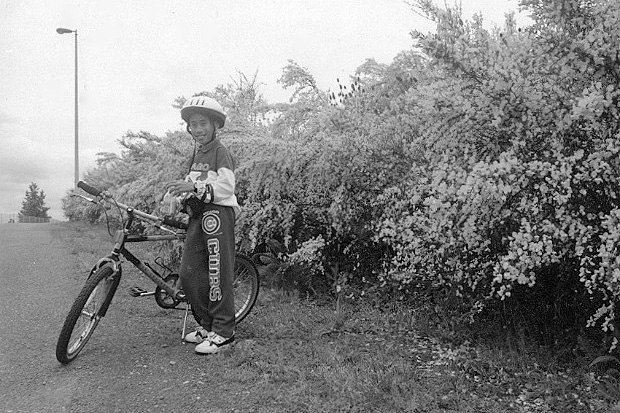
My dad is the real reason I got into cycling. He taught me how to ride when I was five, and we went everywhere. He used to tow me with a bungee cord whenever I couldn't make it up the hills. That's until I got this bad boy. I don't remember what brand it was, bit it had real brakes and more importantly, gears. I have a lot of relatives that live in Chicago, hence the head to toe Chicago Cubs threads. I don't even know how I old I am in this picture. All that matters is that I'm clearly having a blast. Maybe this was the first I made it up without my dad's help. Regardless, thanks dad.

Feel My Heartbeat

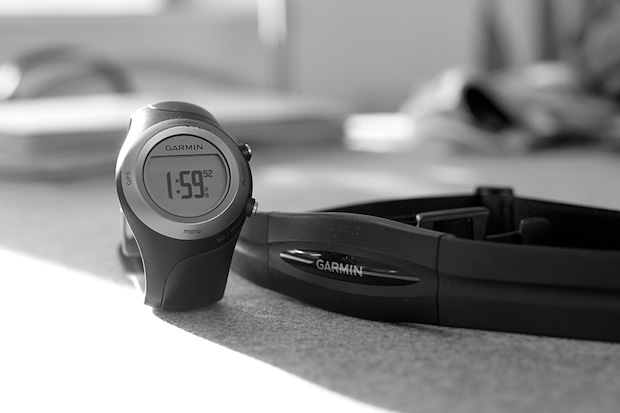
I've been using this Garmin Forerunner 405 watch to track all of my rides. I decided to go with this rather than a traditional bar/stem mounted computer because it's easier to swap between bikes since it uses GPS rather than a mounted sensor. It's a running watch, but it has a cycle mode with a lot useful features. I bought mine from eBay for $150.

Beyond tracking how far or how long I've gone I learned how to track how hard I've gone. The built-in heart rate monitor, which is probably the most important aspect of training, gives you a number of ways to show how hard you're working. Heart rate monitors are great because they aren't too expensive, but a clear understanding of heart rate zones in conjunction with a rated perceived exertion scale (RPE) and a solid year-long plan is necessary to get the most out of it. The next best thing would be a power meter, which calculate wattage output, but they can cost well beyond a thousand dollars.

The bezel surrounding the face is similar to that of the ring of an iPod. It's touch capacitive, while not as sensitive. It's pretty easy to cycle through customizable screens while riding. Above is the watch with the handlebar mount. It's rather bulky but super easy to mount. It came with zip ties, but I just cinch the strap of the watch down to hold it in place.

The watch also features a cadence sensor and speedometer (sold separately), but it's worth it's definitely worth it to me since I use a trainer and GPS is useless if you're not going anywhere. My only gripe is that it uses zip ties to hold everything in place. It starts to look rather clunky, but gets the job done.

The Forerunner isn't perfect. For normal rides it's great, but sometimes abnormal happens. It holds a battery charge of up to five hours. I often have to charge it every other day. Sometimes my rides spill over five or more hours, and I end up calculating the halfway point to get my total distance. While Forerunner is water-resistant it sometimes has a mind of its own when a drop of water falls onto the touch sensitive bezel.

On longer rides I usually carry my iPhone with me in case something happens. Garmin just released this great app called Garmin Fit a couple of months ago. You can even get an adapter so you can use your heart rate monitor strap. I use this app whenever it's a long, dry day of riding. I've used the Nike+ app to track my rides before I got my Garmin, but on rainy rides my phone starts acting up due to moisture. Also, you can't view your stats as you ride unless you got one of those ridiculous looking iPhone mounts.

What I love most about the whole Garmin setup is the website it wirelessly backs up to. Garmin Connect, out of all the ride tracking sites I've tried out, besides Strava, has one of the better interfaces and tools. Here's an example of a ride I did the other day. It's very clean, detailed and provides an endless amount of information. The visualization of information is nice, too. It integrates your choice Google or Bing maps, which is useful for sharing your route or planning new ones. You can even program and upload customized workouts to and from your Garmin device.

Don't get me wrong, I'm not entirely consumed by numbers and results, but it's been harder for me to walk out the door without my Garmin. For me cycling has gone beyond pure recreation and fitness into something more dedicated and serious. In its own twisted way it's become more fun, reaching the outer boundaries of my own limits.

Wake Up Call

I got up at seven o'clock this morning, and I'm running an hour late. Not to work, however, but for my morning ride. It's officially winter, and has been for some time, but it's been unusually warm the past month in New York, until recently. Traveling a lot for work and the time difference doesn't help either, not to mention that it gets dark so early. I'm fighting the constant urge to hibernate.

I enjoy riding in the morning because it's such a great way to start the day. I feel energized. I recently read this New York Times article about how exercise increases brain activity. I believe it. But the road to getting up early has been long and slow.

Just a couple of years ago I'd usually get up around 10am. I'd usually stay up till 2am either working or not really doing anything important. I was a night owl, and my internal clock was set. My wife is a morning person, and I always admired that. It's incredible how much she does and gets done before she heads out for work. Inspired by her routine I decided to do the same. It's nothing like this dumb 5-hour ENERGY commercial. Who drinks that stuff, anyways?

Getting up at a reasonable hour wasn't easy for me. I read somewhere that it takes 90 days or so of consistency for anything to solidify as a routine. I started getting up early five or so months ago, usually around 7am, but sometimes even earlier. That golden hour in the morning is especially great when you're on a bike with no one around, the distant hum of the city starting it's day, just before everyone starts honking their morning rush hour horns. Maybe I need one of these.

Training is just as much about proper rest as it is a good workout. I used to think good riders and pros just rode a bazillion miles as hard as they could all year-long. Well, that's definitely not entirely true. My trainer puts a heavy emphasis on getting enough rest between each workout. Work hard, rest hard. The more I ride the more sleep I need. I even started taking naps in the afternoon, but maybe it's because I'm always jet lagged from all the traveling I've been doing for work. It took me at least four days to recover. Despite that, my bedtime has slowly crept closer and closer to 11pm.

Introducing cycling back into my life has really changed it for the better. Having to get up early to make time for something I really enjoy benefits the rest of my day. I'm more aware of my time working as well as the time needed to disconnect from it.

Winter Sunday Ride

This is one of my favorite rides in Brooklyn. I do this about every weekend. It's close to 50 miles. It goes down to Coney Island, over to Rockaway Beach, up through the Jamaica Bay Wildlife Preserve and back up Ocean Parkway. What I love about it so much is that most of the route is either on a bike path or a lane, and that there aren't many cars, or other cyclists for that matter. It often feels so far removed from the rest of New York City and Brooklyn it feels like my own escape from the city.

At a near freezing 32° it was the coldest ride of the year so far. I decided to leave a bit later than usual, hoping that the afternoon sun would keep me warm. Luckily I just bought a new soft-shell jacket, and had a nice Smartwool base-layer. The other life saver is a thin cycling cap to block out the wind and sun, but also trap a bit of body heat from escaping my head. I was worried it would be too cold to ride, but once you get moving and have the proper layers on it's not that bad.
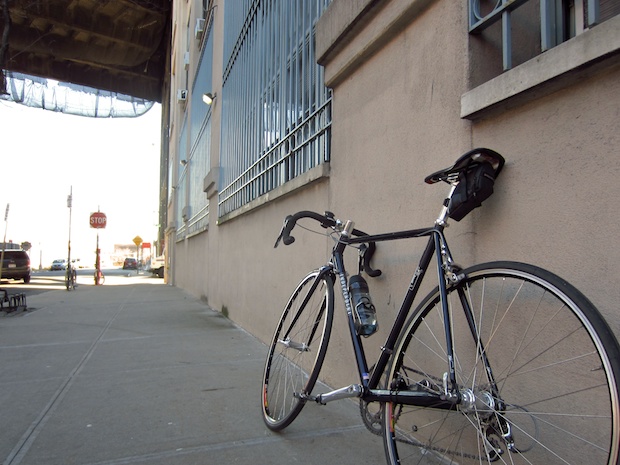
Mile 0 We live in Carroll Gardens, right next to the Smith and 9th St. stop along the F/G train. You can see the train tracks just above. Also, notice that there's netting dangling from the track itself. They're doing track renovations till next year. The station itself closed at the beginning of summer, which means we have to walk to the next stop to catch the train. Such a bummer. Even more reason to ride a bike or to just stay in Brooklyn.
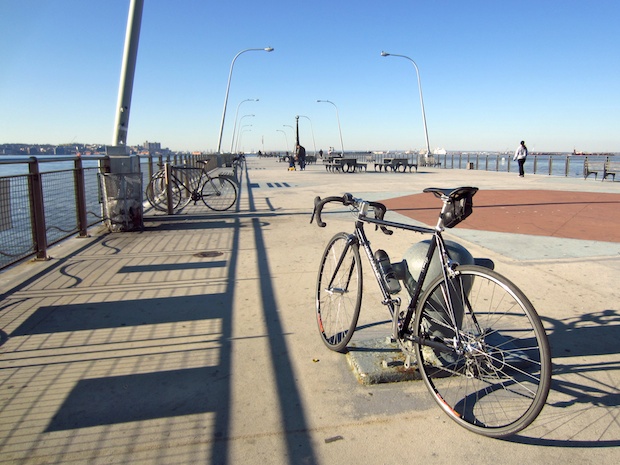
Mile 4 Cut through the industrial zone of Sunset Park, and around Owls Head Park in Dyker Heights you'll hit the pier along the Hudson River. From there you can see Staten Island, the Statue of Liberty as well as the Verrazano Bridge way out into the distance. So far it's a beautiful sunny day without a cloud in sight.
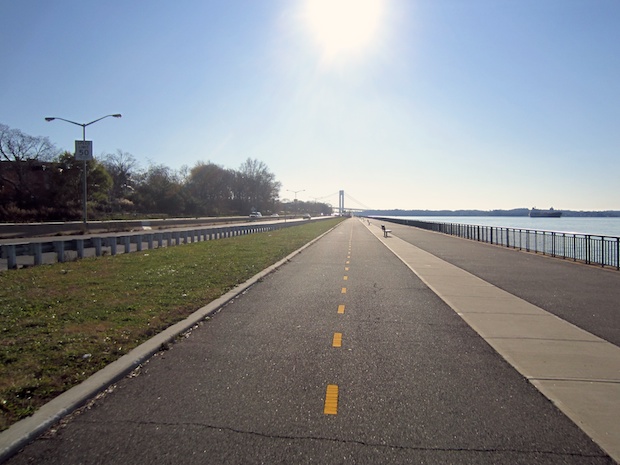
This is also where a long stretch of bike path begins. It goes on for about 4 miles, almost all the way down to Coney Island. Along the water you'll see fisherman, each with at least 3 fishing poles leaning against the rails. I have no idea what they're trying to catch, but then again I never stop to find out.
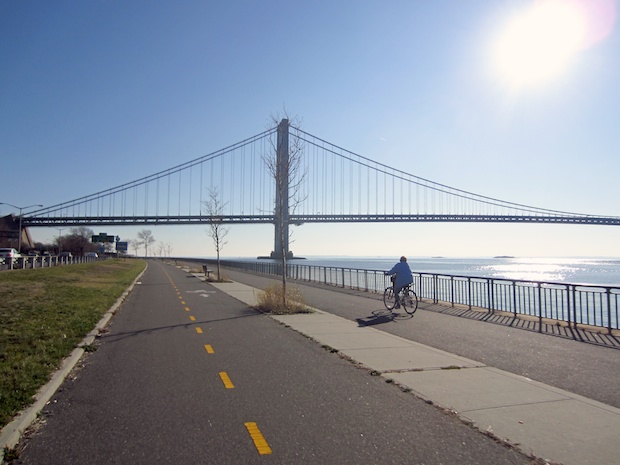
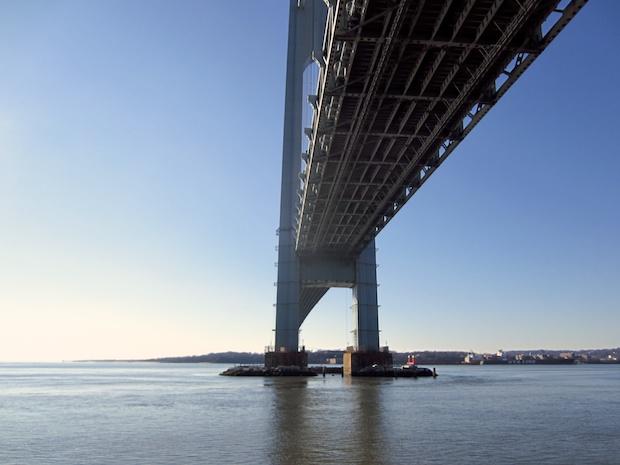
Mile 7 The Verazzono bridge looms overhead. It connects Brooklyn to Staten Island. Unfortunately there isn't a bike lane on the bridge. However, my neighbor told me this crazy story about when he and his buddies to rode their bikes over the bridge, along the edge, traffic roaring by, just for fun. I think they eventually got pulled over by the police.
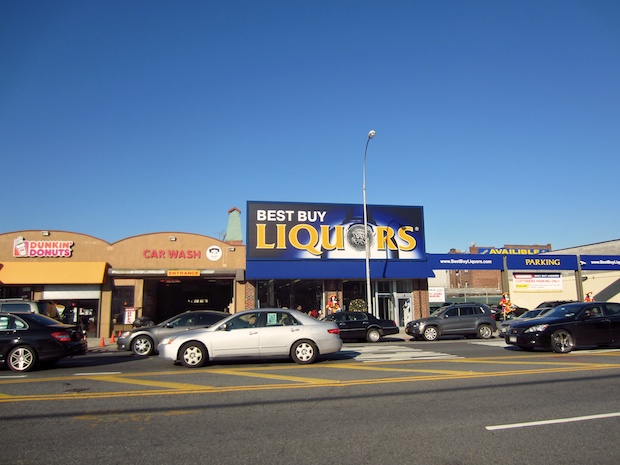
Mile 10 First pit stop, Best Buy… Liquors. WTF! Now I know I'm in Coney Island. This is also a great point in the ride if you ever feel like you just can't pedal anymore. You can hop on the F train all the back home.

Mile 12 Past Coney Island, Brighton and Manhattan beach you come across this washed out section of trail, which means off-roading skills will come in handy. It's only about 100 yards or so of sand. To the right is the bay opening to the Atlantic. In the summertime you can see a ton of windsurfers all cutting across the water.
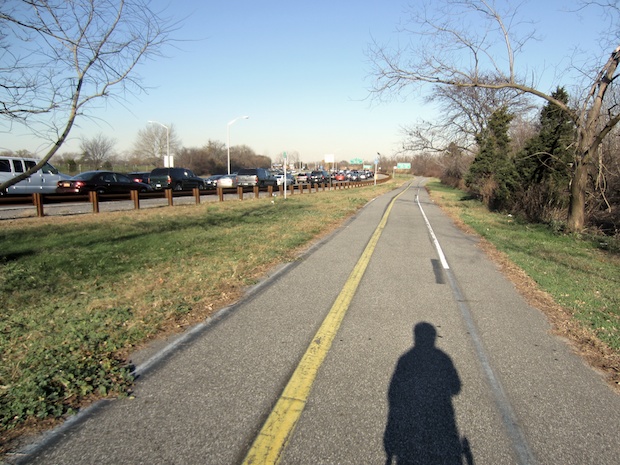
Just past the washout is Shore Parkway, all jammed with traffic. At this point I have only seen a couple of other cyclist on my ride so far.

Mile 16 Past the Brooklyn Marine Park, there's the Marine Parkway Bridge, which goes right into the Rockaways. You real begin to feel the distance. Sometimes the wind gusts are so strong it feels like it'll toss you right over the edge. I guess that's why there's a sign that says to walk your bike, but who's gonna walk the entire length of this? The entire ride remains relatively flat. The only elevation gain is at this crossing.
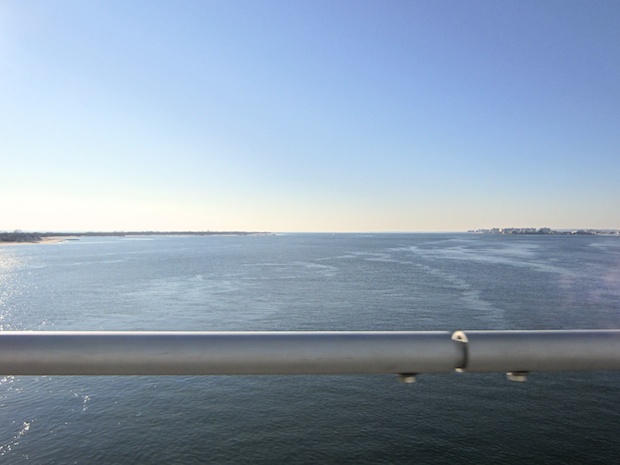
Halfway across the bridge and you can see the edge of Coney Island to the right.
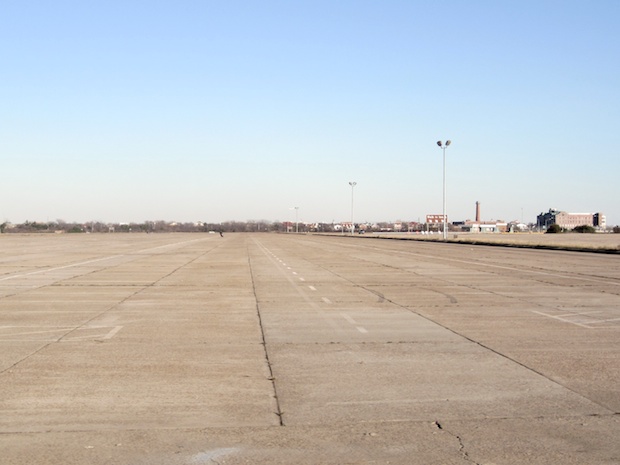
Above is an epic vacant parking lot of Jacob Riis Park. I can't imagine it filled with cars. Even in the summer I rarely see a quarter of the lot full. It's at this point when all you can hear are your gears spinning and tires gripping the road. No one for at least a half mile in either direction.
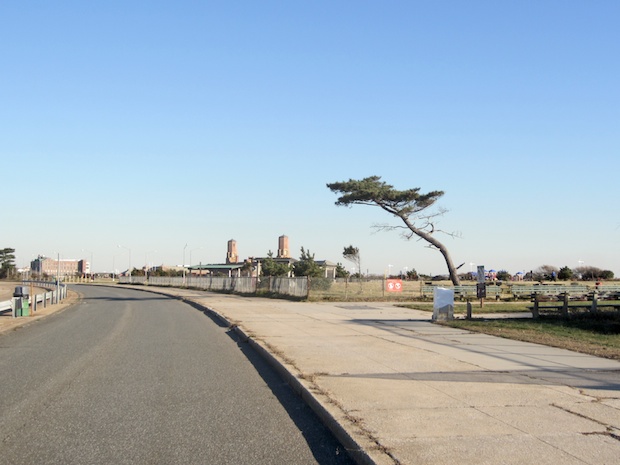
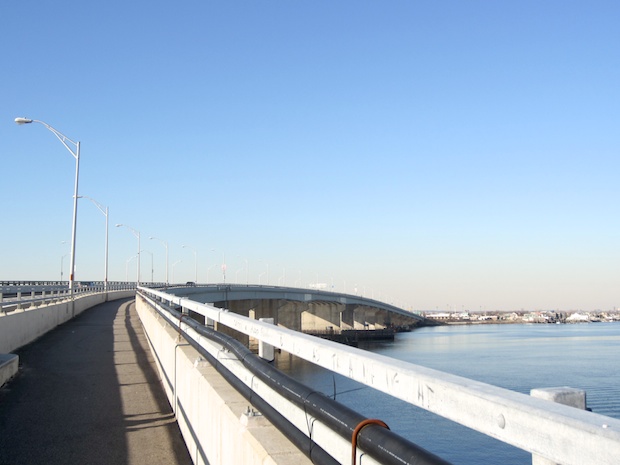
Mile 22 At the very edge of Rockaway Beach there's a connecting path that goes up through the Jamaica Bay Wildlife Preserve. Beyond the water on the right is JFK International Airport. Also, another walk your bike across the bridge sign. Why?
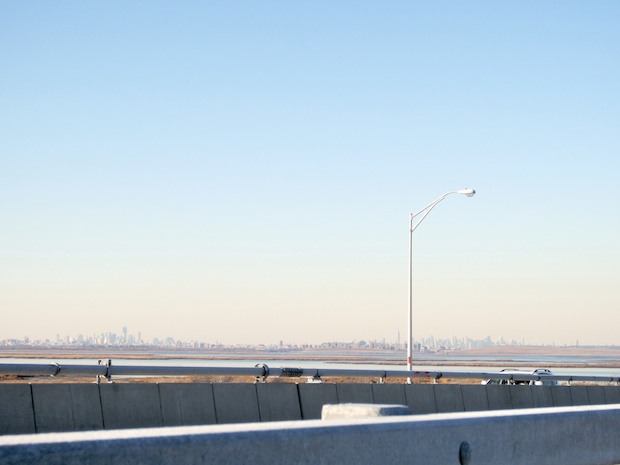
Halfway across the bridge you can see pretty much the entire stretch of Manhattan way out in the distance. The photo really gives you an idea of just how far away from home you are.
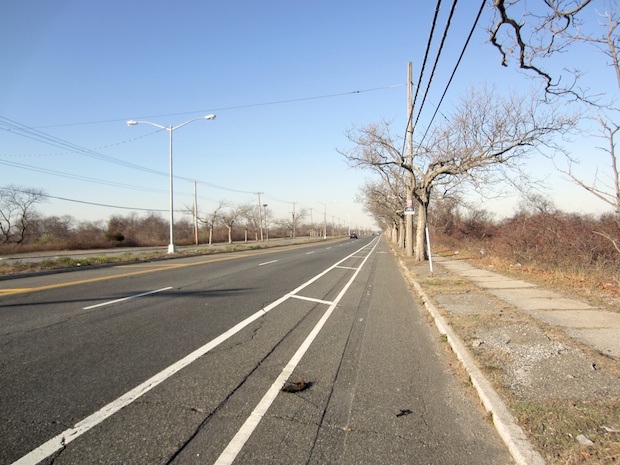
Riding through the preserve isn't as spectacular as one would imagine. It's on either side of this rode where bikes are prohibited. I remember once in August, along this same route, it was in the upper 90's, and I ran out of water. While relatively short it was the longest 5 mile stretch. Thank heaven for 7-11 on the other end.
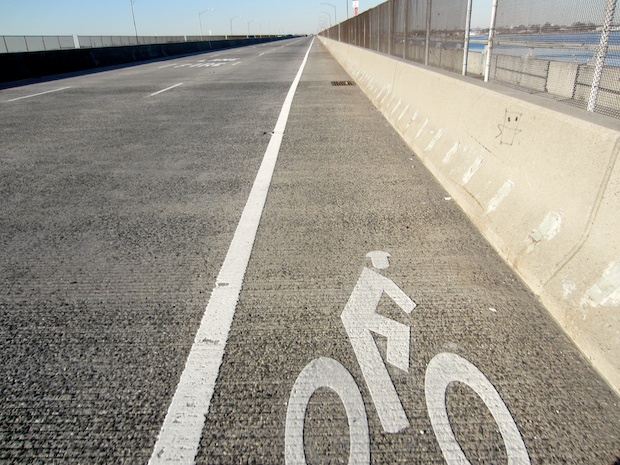
Mile 26 The bike path picks up again after winding through the suburbs of Howard Beach. It's just past the halfway point, on the furthest edge of the figure eight loop. It's not my favorite part of the ride because of all the construction being done to the road as well as bike lane. The Belt Parkway runs parallel to the path for most of it's length, and it's always littered with debris and deafeningly loud.
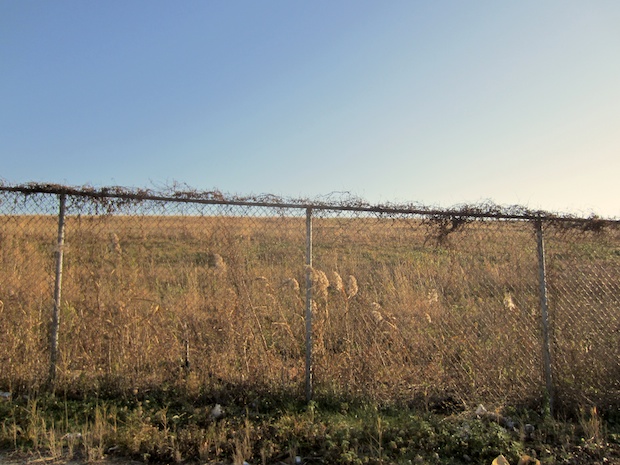
Along the left side, behind the gates is the soon-to-be-opened park-project by Mayor Bloomberg. I forgot the name of it. I guess it's a mountain made of trash. Sadly it blocks the view of the bay on the other side.
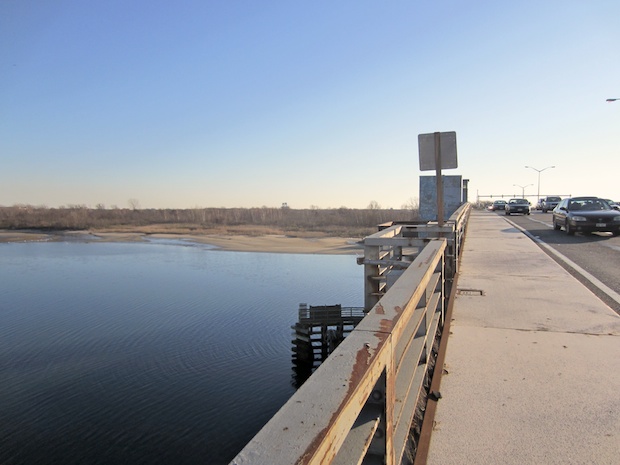
Mile 31 Another narrow, but beautiful crossing along Belt Parkway.
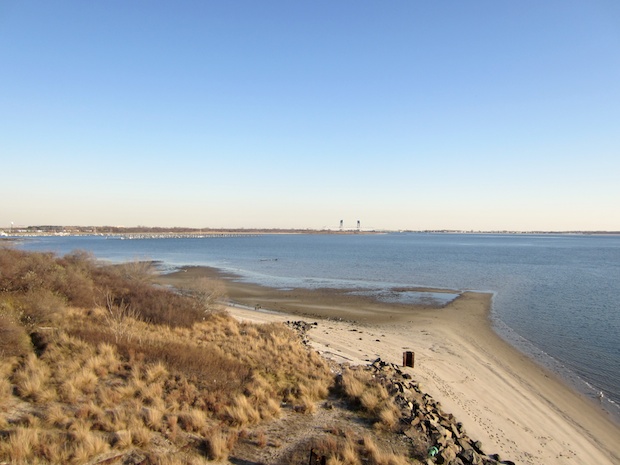
The view on the way back is spectacular. You can see the Marine Parkway Bridge out in the distance.

A lesson I learned a long time ago was to ALWAYS bring either a spare tube or patch kit, especially riding in New York. I flatted just as I was making my way up Ocean Parkway. Luckily I've fixed hundreds of flats in my lifetime so I'm up and running in less than 10 minutes. It would have been sooner if it weren't for the dropping temperature and my frozen fingers. I'm thinking it's time to upgrade my tires to something slightly heavier, but with a tougher casing.
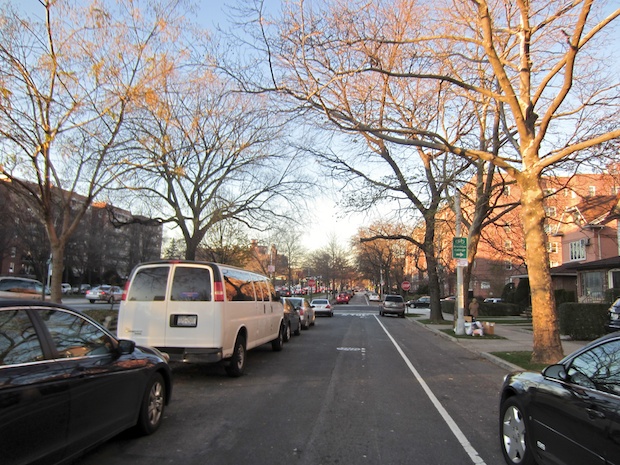
Mile 40-50 The homestretch. Although there's a bike lane on the either side of Ocean Parkway I choose to ride on the road. Why? For me it feels safer. So many times have cars cut corners, trying to make the endless row of lights, nearly plowing me over as I'm crossing. Plus the pathway is often overrun with people, despite there being a dedicated pedestrian walkway. Most of the pathway is uneven with slabs of concrete jutting straight up, waiting to give you a pinch flat.

Normally after a ride like this I'd collapse. Dead tired. However, because it's now a part of my regular riding routine I remain relatively unaffected. Doing long miles like this is not only a physical but mental exercise. I know what 50 miles feels like, and I know how much I should eat beforehand, during and after. I know how hard I can push myself and when to back off as needed. As I begin to increase my time and distance on the bike it all gets easier, gradually. Rides like this also give my mind a break after sitting on a trainer for days at a time. It also reminds me that Brooklyn has a it's own natural (and unnatural) charms.
Fuel for Thought

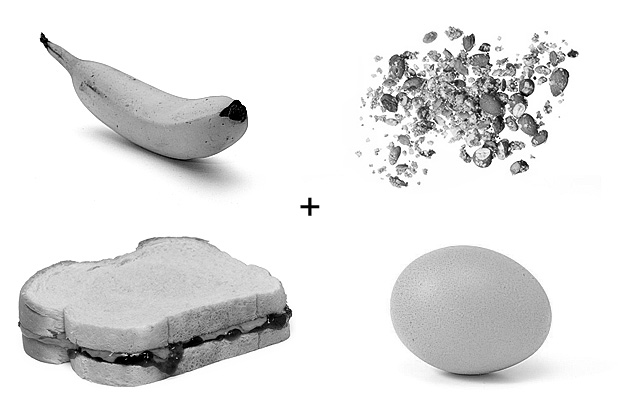
Eating right in cycling is really important, more so if you're in training, and crucial for racing. It's remained a mystery to me, but then again I never looked at it closely till now. Long story short, I'm definitely not eating enough, evident in the past when I'd bonk, a term to describe when you've completely run out of fuel, and suffering because of it. Nothing's worse than running on empty with 10 miles to go. I've learned my lesson and remain hyper-aware of how much I eat before and during a ride, more so now that I've increased my hours on the bike. Now I don't go anywhere without having had a proper breakfast of either granola or oatmeal with bananas and a little coffee. Before I'd skip it completely and pay the consequences.

I started counting calories, and it's interesting to learn how much is in everything you eat, how certain foods have more than others, and which things are just plain bad for you. To keep track of calories I'm using an iPhone app called MyFitnessPal, which is pretty good so far. It has a barcode scanner that automatically finds the product and it's calorie count, however for home made meals it's a bit more difficult since you have to break it down per ingredient. On average I expend between 4000-5000 calories, depending on the ride, which is more than twice on any given day I don't work out.

The problem I'm running into now is that I find it hard to build an appetite. Despite eating at least five or more meals a day I'm still coming up short. The other issue I'm figuring out is finding the best things to eat that take little to no time to prepare, as I'm usually consumed with work during the day. I've often wondered about protein powders and weight gaining formulas, but that stuff really freaks me out. I'd rather do it naturally and with simple foods. It's tricky because I want to stay relatively light weight and gain strength at the same time. I recently purchased this cook book by Dr. Allen Lim and chef Biju Thomas called The Feedzone Cookbook. I haven't made anything from it yet since I've been traveling so much lately, but it looks promising.

The month ahead looks to be brutal. Not only is the weather beginning to get colder I start power intervals for the first time. These are basically sets of all-out sprints for a couple of minutes at a time over 20 minutes. This means I really have to have my daily nutrition under control if I'm to survive this training block. Luckily I love to eat and live in a great city for it.

I ♥ Mountains

I'm now in Chicago for work this week. Luckily there are better machines for training at the hotel I'm staying at, but do I ever miss riding on a real bike. Every time I visit Chicago I can never get over the fact that most of the Midwest doesn't have mountain ranges like the West/East Coast does. It's so flat. Too flat. I do like elevation gain and sweeping views of valleys and trees below. How do people ride out here? Well, that's easy considering there aren't any hills, but I guess I should ask how do people train out here?

I grew up in the Pacific Northwest. Pictured above is Mount St. Helens after it erupted in 1980, which was the year I was born. I've been mountain biking on the Plains of Abraham, the blast zone, which is an incredible ride. It's like riding on the surface of the moon with it's pumice single track and barren landscape. The outlying trees are all blackened from the blast and swept to the side as if mother nature took a comb and parted the south face of the mountainside. It's so epic and easily seen for miles.

Living in New York you have a fair share of mid-size mountains, but nothing like out west. I took it for granted, and completely miss it. The biggest peak I've ridden so far was an out and back ride to Bear Mountain north of New York City along the Hudson River, with a total round trip of 120 miles. The most I have ever ridden on road. With a name like Bear Mountain you'd expect it to be a 'bear' of a peak to conquer, but it really didn't take me long to get to the summit. The other peak I've done is Blue Mountain, just on the other side of the Hudson River, but that's all mountain biking. I know I've only seen a fraction of what New York has to offer, but I do miss living in a city with real mountains nearby.

As I settle further into my training schedule I often get concerned that I'm not attacking climbs like I ought to. It's hard when you don't have mountains as easily accessible as you would in the Northwest. I remember my rides in Portland and Seattle as a constant hill climb. I'd ride down a massive hill to school, then back up; back down the other side to work, and all the way back up. It was never easy, but I prided on my ability to get anywhere in Seattle in 15 minutes or less.

My trainer tells me the lack of climbing isn't an issue in the sense that regardless of hills or not, it's about training your body's energy system to accommodate stress levels for long periods of time, resulting in doing a lot of intense interval training. I'm about to launch into my second block of training which is supposed to be really demanding with the intervals becoming shorter and more intense, and it's only december! Regardless, I'm looking forward to the change of pace and hopefully some good results.

See you at the top.

Hans Rey's Distant Nephew?

http://www.youtube.com/watch?v=Cj6ho1-G6tw&feature=youtube_gdata_player Who remembers trials riders of the 90's? Libor Karas and Hans "No Way" Rey, of course. To me they're considered old school. The pioneers. It's been forever since I've watched these scale 8 ft walls in a single bound, or hop from palette to picnic table.

Well Danny MacAskill, a trials, free-riding, hybrid from Scotland has recaptured my attention and admiration for anyone capable of doing just about anything on two wheels. He's different from Hans and Libor in that he combines BMX, trials and the free-riding spirit of todays extreme riders.

The Captain

Ned Overend "The Captain" turned 56 years old this year, and has dominated the mountain biking scene for as long as I can remember getting into mountain biking.

Having won the first official World XC Mountain Bike Championship, the picture above is of his recent victory at the Mount Washington Auto Road Bicycle Hillclimb, beating out pros half his age. It goes to show you're never too old to ride or race. Truly an inspiration.