
 Mmm… titanium. Just got my titanium brake bolt kit in the mail today. I'm an unashamed weight weenie, but you know, it all adds up. I got this kit off of eBay for $40, which isn't too bad for roughly 40 grams of saved weight.
It's Just a Water Bottle, Right?
 How can one be so excited about something as simple as a water bottle? Well, this is no ordinary bottle to me. Gone is the nasty aftertaste of backwash water from the weekend ride, half-baked in the sun, the hint of melting plastic and potential mold. Specialized developed the Purist WaterGate Bottle that's engineered with a special plastic that resists taking on odors and flavors of popular sports drinks. It's as if it were made of glass, leaving water tasting pure and fresh. It's easy to squeeze and features a nice open and close valve. I may never use my hydration pack ever again, and opt for carrying these bottles instead.
Mmm… Titanium
 It was a gorgeous day for riding today. It felt like spring. I went down to Coney Island and back on my Epic with my friend, Fred.
A very fun package was waiting for me. A little piece of titanium goodness that is the quick release skewer. I found this RavX titanium skewer on eBay. It's roughly 40 grams for the pair. They're SUPER light. Because my suspension for has oversized end caps I figured I wouldn't be loosing much in stiffness. It's these small inexpensive personal touches that make your bike your own.
The Big S
 I have a soft spot for Specialized. My first mountain bike was a Specialized I bought from R.E.I. with my Dad. My first bike ever stolen was a Specialized I built up from spare parts. I now own two Specialized mountain bikes, and a custom IF road bike. I have mostly Specialized branded components, with the exception of a Bontrager water bottle cage and a Ritchey Superlogic seat post. Normally I like mixing and matching parts, but I really like how most everything Specialized goes well together. You either love or hate the big S, but I have history with the brand.
Renegade Recap
 After my first ride I can easily say that this tire is FAST. I even have proof. Maybe I picked a perfect day for trail conditions at Cunningham Park. It was hard-pack with hardly any mud. I've ridden the park countless times with similar conditions, but lately it's been rather slippery. I wasn't even pushing myself that hard, and felt I could have shaved off a few minutes if I really hammered. The tires hooked up flawlessly. I noticed the quicker acceleration. On the downside, because of its lower air volume, I noticed the need to put more PSI to keep the tire from rolling of the rim. I'm now tempted to try them on the front…
Birthday Present
 For my birthday I treated myself to a new Ritchey SuperLogic Carbon seat post. It's super light and easy to adjust. I'm also able to use my carbon railed Specialized Phenom Pro saddle, previously on my road bike. I probably saved close to half a pound with this upgrade. The finish on the post is quite nice. It's glossy black. Even thought I'm a purist when it comes to brands and their respective components I think the mismatch is justifiable.
Renegade 1.8" Tire
 So I just received my new Specialized S-Works Renegade 29x1.8" tires in the mail the other day. They're freakishly narrow. So narrow in fact I only decided to mount one tire on my rear wheel to see how they hook up. Putting one on the front just seems crazy, at least for the kind of trails I'm riding now. I'm sure if it [trail] were fast and flowing hard-pack they'd do just fine, but on first impression it does take some time to get used to.
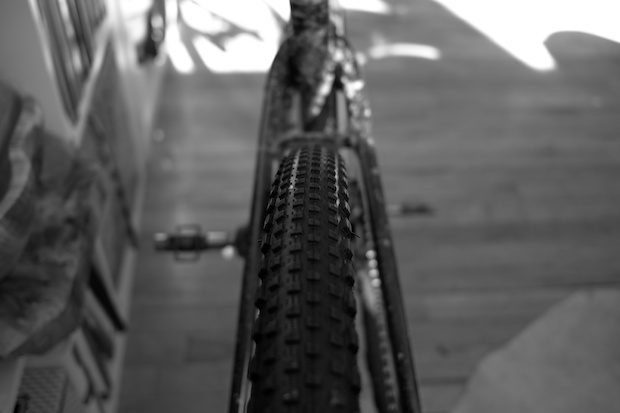
Not only are they narrower they happen to be not as tall, perceivably. They have quite a bit less volume than their 1.95" counterpart. I was expecting them to be slightly bigger, but as a rear tire it won't matter as much. They look more like a cyclo-cross tire than a mountain tire, but I guess I'm just used to the bigger volume tires I've been riding.
The tread pattern performs really well as a rear. Hardly any slippage on most terrain. The biggest gain besides less rolling resistance is how light they are. At 430 grams they spin up really fast, which is important to me considering I'm on a 29er full-suspension bike. We'll just see if it's worth the tradeoff.
I also put on a new 1.95" S-Works Renegade on the front, which I love, almost as much as the Fast Trak. I figured I'd better start getting used to my race set up now.
Ok, time to hit the trail for an extended test.
Show Me Yours
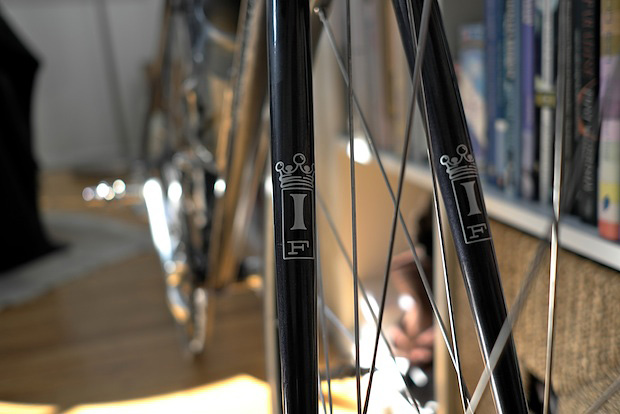
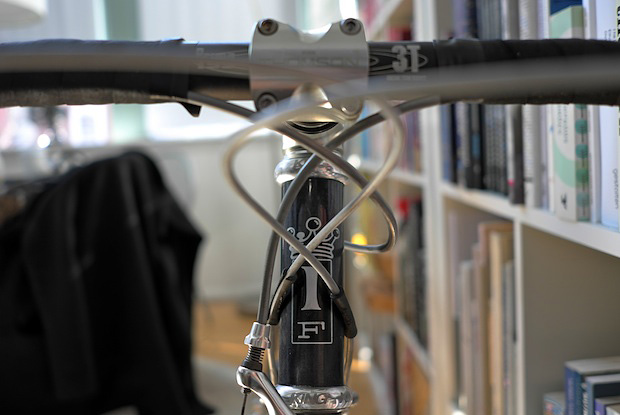
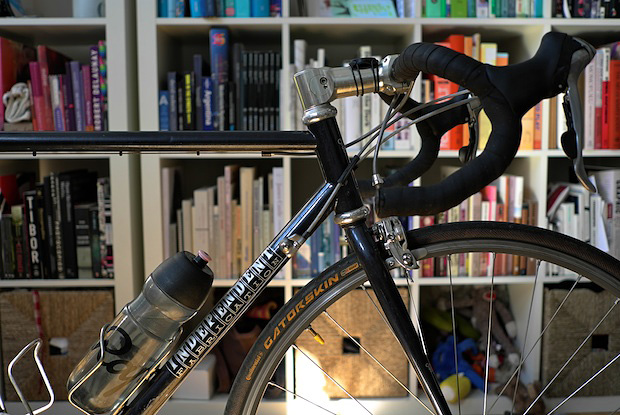 Rapha asked for photos of your handmade bicycles in recognition of this years North American Handmade Bicycle Show held in Sacramento, CA. You can email photos or Tweet using the hashtag #showmeyourbike. See more pictures of my beloved Crown Jewel, hand-built in 2001.
Tire Choices
 I've been riding this tire combination for the past 6 months or so, the Specialized S-Works Fast Trak 29x2.0 up front, and the S-Works Renegade 29x1.9 in back. They're both really fast and very light weight. The Fast Trak has a lot of grip especially in looser conditions. I can really lean into a turn much better than the Renegade. It comes in at about 520 grams, which is very respectable. I run both tires tubeless at around 23-24 psi.
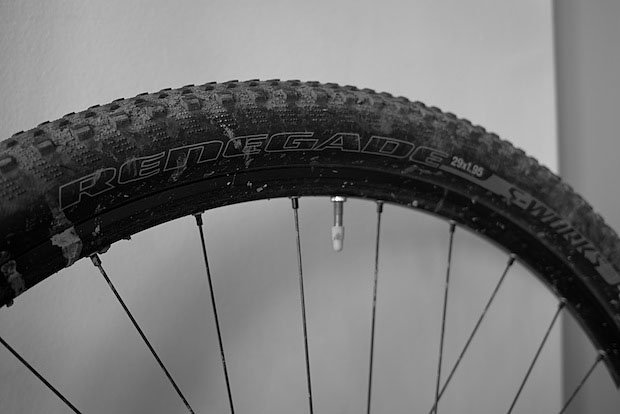
With the upcoming race season I'm contemplating running the even lighter and faster rolling Renegade 1.8" tires. They have low rolling resistance, but require a bit more skill and finesse on loose and technical terrain. That's about a 1/4 pound of rotation weight savings, which is substantial for a race bike. I'll wait for dryer conditions before I pull the trigger.
Tough Shooter
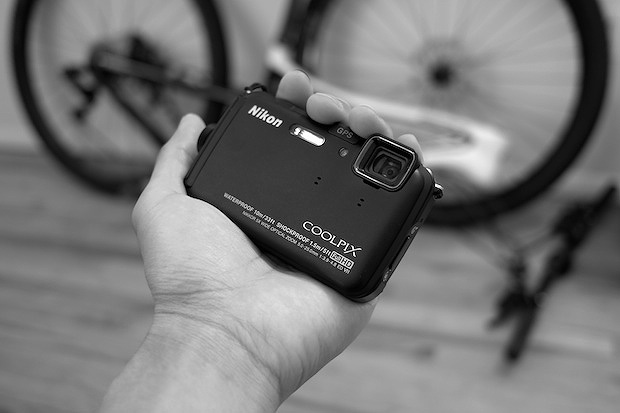 I love camera gear almost as much as I love Apple products and especially bikes. I always have a camera on me at all times, whether it's my iPhone or Canon Elph. They take great pictures, but I'm always a little apprehensive when the weather turns for the worse. I've had my iPhone freak out and shut down if it rains or if I get so sweaty it permeates through my jersey fabric. I've had my Canon PowerShot Elph 300HS completely lock up due to its fragile casing, especially its retractable lens cover. It takes great pictures and the focus is unbelievably fast for a point and shoot, but it's toughness is something left to be desired.
I needed a rugged camera that I didn't have to worry about, which is why I picked up Nikon's new Coolpix AW100. It has a large 16 megapixel CMOS sensor, fully waterproof and shock-proof casing, as well as a GPS geo-tagging feature, plus 1080p HD video shooting capability. What I also like about his camera so far, while not as tiny as my Canon, is it's relatively small size and non-retractable fixed lens. I'm still getting used to how everything performs. I'm used to Leica's and Canon's, but so far it's easy to use. I'll be posting a followup review as I get more familiar with it.
Garmin Edge 500
 As much as I loved my Garmin Forerunner 405 watch I knew it wouldn't keep up with my evolving training schedule. The main problem is that the battery would die after four hours of use, which is fine for being a running watch, but my rides are gradually getting longer and longer. I picked up a new Garmin Edge 500 mainly so that I could sync it with my new Powertap G3 as well as make use of its long-lasting battery.
It does everything my 405 did and more. Making use of Garmin Connect's Courses feature, which by the way got a serious makeover recently, made mapping new routes a breeze. You can then upload it to the Edge 500 and follow the pre-plotted course. It's still a little buggy, but works fairly well. I also use the Workout feature and uploaded those to the Edge.
Besides that the Edge 500 is nice and light, and not too overbearing in size. The mount is simple and secure. The unit itself is weather resistant, but I don't like how hard the buttons are to push. The display is decent and has a number of options for how much data you want to see at any given moment.
I'm now fully hooked up; a heart rate monitor, a cadence meter, and now a power meter. It feels odd to be so connected to your bike, but it's almost become second nature by now. Learning how to associate the numbers I produce to how it really feels will be an important tool in the future. Right now I have a good understanding of my heart rate zones and cadence, but I'm still getting a feel for wattage and power zones.
Where's Your Head(set) At?
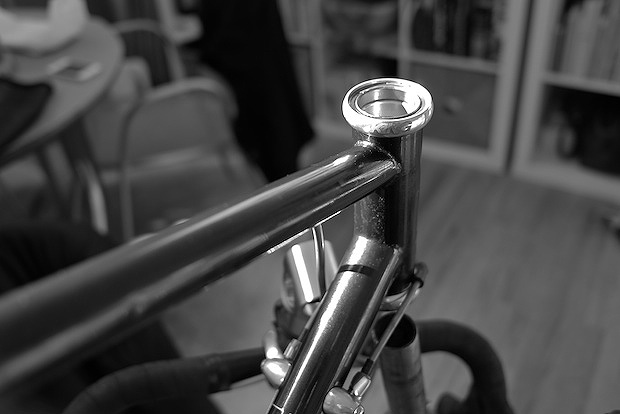 I felt a little play in my controls the other day. I rocked my bike back and forth with the front brake locked, and felt a little knock, which can only mean my headset was loose. I've got a Chris King thread-less headset with sealed bearings, and honestly the last time I looked into it was 1o years ago. I learned my lesson today that you should check your bearings at least once a year or two, not ten.
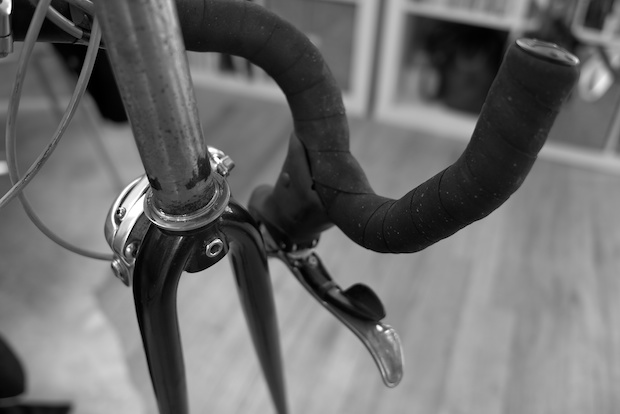
The first sign of trouble was the fact that I couldn't even slide the top cap off one the stem was removed. The thing had frozen shut. I went out and bought some WD-40 to loosen things up and hammered away till it became loose. Even then I had to tap it off the steering tube. No harm done, just needed to file away the dents I put into it (steering tube). Afterwards I sanded away any remaining rust spots and uneven surfaces, and proceeded to overhaul the headset bearings.
To my surprise the bearings were still well sealed and had a bit of original grease. I cleaned and repacked it any way. This headset is pretty much bomb-proof. Now I've got a happy headset. I'm beginning to suspect my bottom bracket is in the same dire need of a once over and at least a good spray of WD-40 to deal with possible rust. I just love stuff that I'm able to work on myself.
Brain Dead
 Being a home mechanic has its ups and downs. I recently went riding in the snow and noticed my fork wasn't working properly. The problem was that the rebound adjustment knob was sticking on my RockShox SID/Brain suspension fork. So I unscrewed the knob and tried to manually turn the valve. Since it's made from aluminum I accidentally applied too much torque and bent it. Doh! It's now being sent back to RockShox for further repair. No mountain biking for me. Lesson learned. Great suspension fork, otherwise.
Powertap G3
 I pulled the trigger on a new CycleOps Powertap G3 hub recently, and built it up with a new Mavic Open Pro CD rim. I've managed a few rides on it already, and am starting to make sense of all my wattage numbers. It's a rather expensive piece of equipment, but, if you're serious about training, power meters are the way to go. They give you a definitive set of data that point out how much work you've done, as well as the areas you can improve upon.

The G3 is lighter and better than last years model. It's only a weight penalty of 60 grams or so compared to my Chris King hub. It features internals that are more easily serviceable. Rather than sending in an entire wheel you only have to replace the end cap, which is where most of the circuitry is enclosed.
The more I learn about training, heart rate zones and wattage, the more I'm realizing how cycling as a sport is much more calculated and precise. Even aero bikes, bars and helmets can amount to wattage savings. It's kinda nuts. Speed and efficiency can almost be bought to a certain degree.
I'll be following up with a more in-depth review of the Powertap and the numbers it produces.
Man's Best Friend
 The little guy huddled in the shade is our dog, Marlow. He's a long-haired miniature dachshund. You'd think with short legs he have a hard time keeping up with me. He does, which is why rides with me in a messenger bag from Wagwear. In the warmer seasons I take him up to Prospect Park for off-leash hours in the morning to let him run around with other dogs. Afterwards we'd go for a lap or two around the park. I can't tell if he enjoys riding with me or not, but he's pretty docile and well-behaved once he's in the bag.
Trustworthy x 2
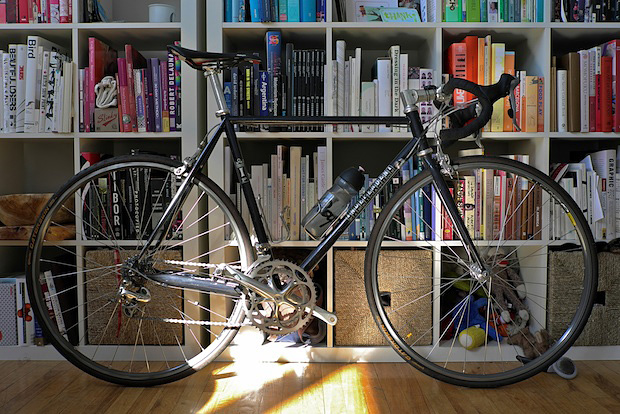
 I updated the page about my bikes, an Independent Fabrication Crown Jewel and a Specialized Epic Expert Carbon 29er. The road bike is over 10 years old now, and the mountain bike is fairly new to me, but they both instill great confidence on the road and on the trail, respectively.
Continental Gatorskin Tires
 My first impressions on the Continental Gatorskin tires after a handful of long rides are pretty good. Despite having my first flat on them the other day on a training ride, due to a roofing nail going straight through, they seem impervious to debris that would have otherwise cut through the casing of my previous tire, the Michelin Pro Race 3. Even while the tire continued to lose air it felt very stable.
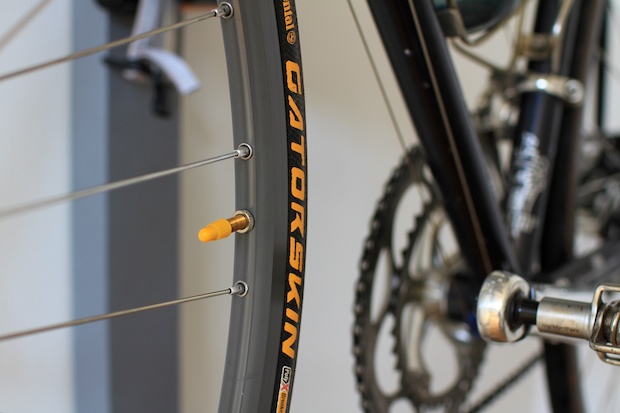
They are a tiny bit heavier, but the more robust casing and durable tread make up in overall performance. I went with a lighter tube from Continental so they rotational weight is fairly comparable.
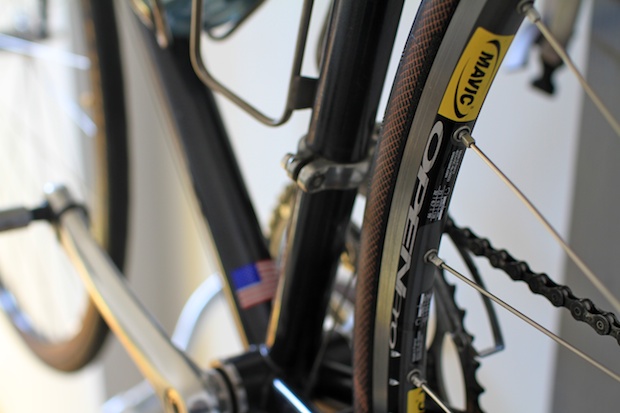
Mated with the new grey finish of the Mavic Open Pro CD my new wheels are looking great. Love the orange lettering of the tire, and wished the rim decals matched, but then again I don't like bike stuff to be 100% coordinated.
Again, this is a short-term review and we'll see how these tires really hold up over the long haul. The compound and slight tread pattern, while a little nerve-racking at first, feel very responsive. I haven't ridden them in the rain yet, which will reveal their true strength and weaknesses.
Winter Gloves
 Just got new winter gloves when I thought the weather was taking a turn for the worst. The last cold ride I did left my fingers painfully numb. However, the past weekend was perfect for riding. I did 35 miles on Friday, 60 on Saturday, and a short 14 mile recovery ride with my wife on Sunday. New York doesn't have the most predictable weather, so I'm certain I'll be slipping these on in the near future.
Wheel Build
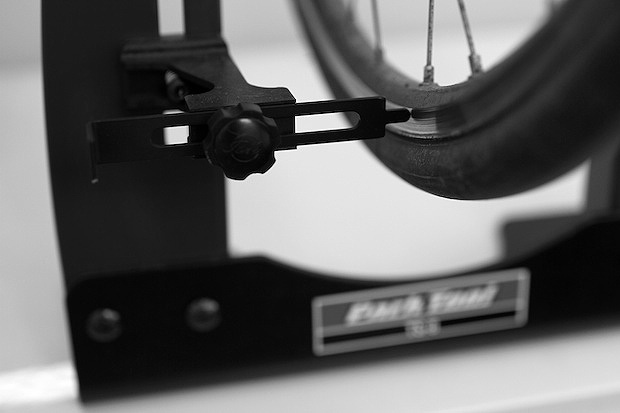 I recently rebuilt my wheels on my road bike. I went with an updated Mavic Open Pro CD rim, which hasn't changed much in design, meaning that these are a tried and true product. They're relatively light and very durable compared to what's out there today. I rode on my last set for 10 years and put thousands of miles on them. I used the same DT Swiss Competition spokes and alloy nipples, making this a really easy rim swap.
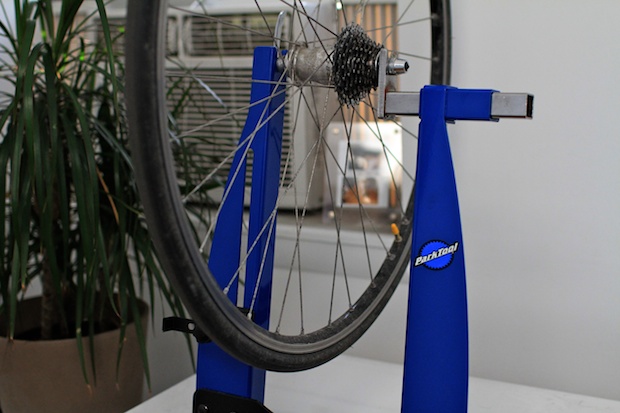
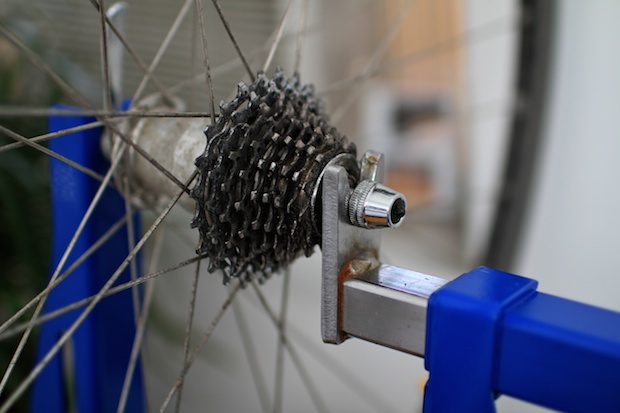
I own a Park Tool home mechanic wheel truing stand, which gets the job done, but in retrospect I should have bought their professional stand for more accuracy.
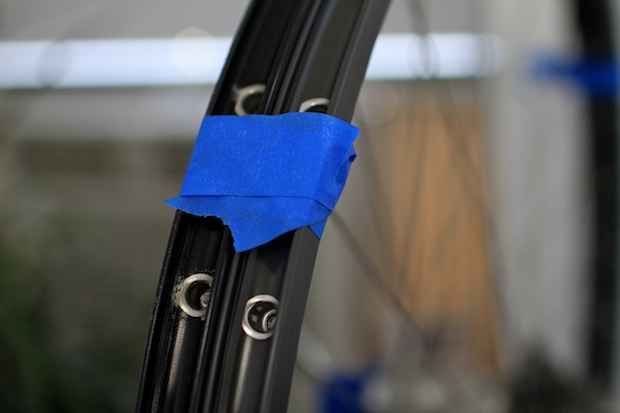
I tape the rims together and make sure the eyelets match up because they are slightly offset for right and left spokes.
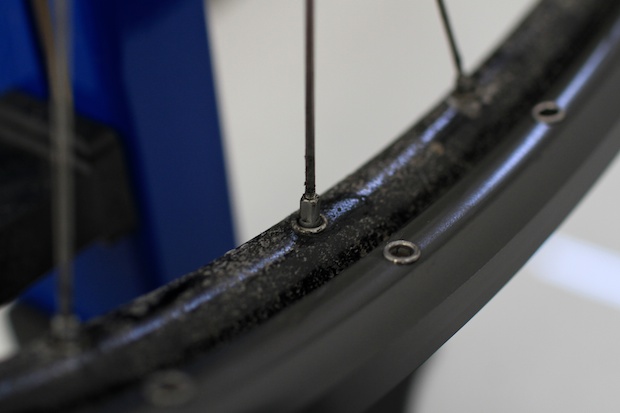
One by one I gradually loosen each spoke nipple till I see the majority of the threads. From there I transfer each pair (spoke and nipple) to the new rim, but clean and lube the threads before each swap. Besides having a spoke wrench it's helpful to have a flathead screwdriver on hand.
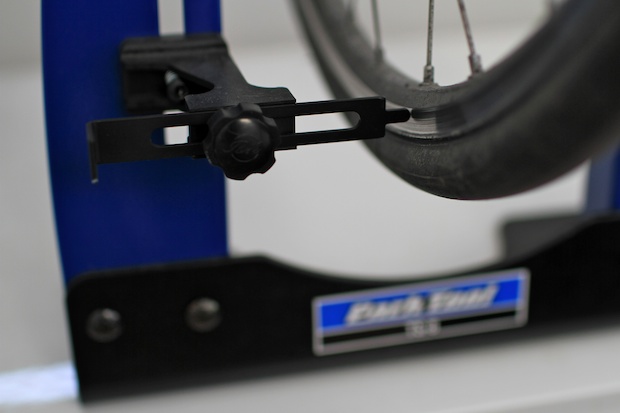
Once I've re-threaded all the spokes and nipples to the new rim I start tightening everything down. I start off by tightening each spoke nipple a whole revolution till it's relatively taught. This is where real skill comes into play. Not only do you have to center the wheel horizontally you have to make sure it remains round vertically. Tension is crucial as you don't want too much or too little. This is where I'm gambling a bit since I don't own a tension meter. Having built wheels in the past I have a fairly good idea of how tight they should be.
The whole process took me around four hours. I remounted the old Velox rim strip and installed my new tires and tubes. After a few rides everything seems to be perfect. Along with the new rims I installed new brake pads. With new wheels there's always a break-in period where everything will need a slight adjustment.
I'm just happy and proud of myself that I didn't forget how to build wheels, even from scratch, where you'll need a spoke calculator and an understanding of lacing patterns. I have a feeling I'll be testing those skills soon enough.
Colder Than Cold
 Just a few days ago it was a pleasant 50º, and this week it dropped well below 30º. On Tuesday I went for a ride to test out some new winter gear I got this Christmas, a new Rapha winter jersey and a pair of 3/4 bib shorts. It was 24º by the time I hit the road, and a part of me wanted to turn back immediately. It was so cold by the end of the ride my hands were numb. Guess it's time to upgrade to some winter specific gloves.

Not only was it 24º there was a 15 mph northeast wind gust making it even colder, not to mention I rode along the waterfront a bit.
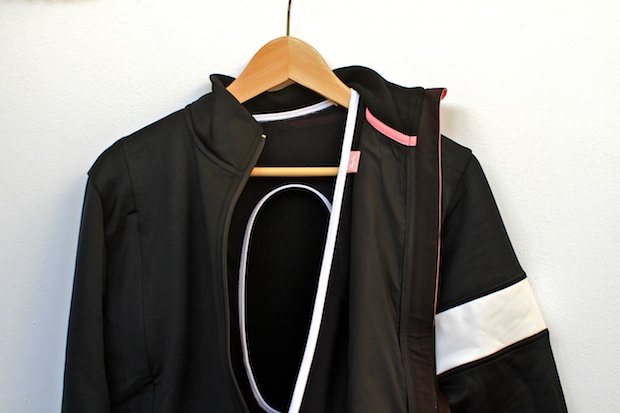

At this point the cold has penetrated the outer layer of my new jersey, which is lined with a heavy merino wool fabric and windproof chest panels. I also had a base layer underneath, but I think it was the super windy conditions that did me in. However, once I got rolling and warmed up I didn't notice it as much. I think wearing a lightweight shell would have been perfect.
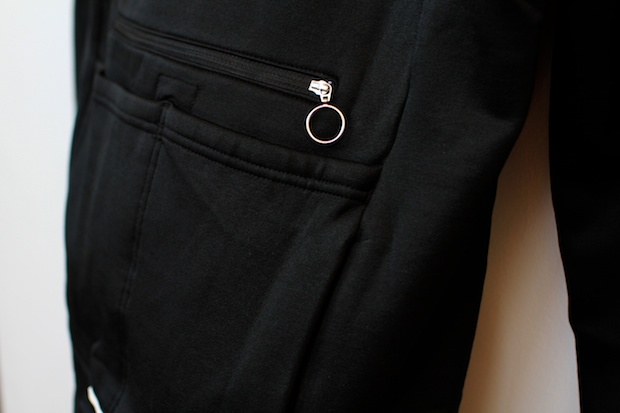
What I appreciate most about this jersey is the pocket layout on the back. There are two large pockets, along with a large and small zip compartment. I could easily carry a jacket, food and my usual stuff. There's also a thin reflective band at the bottom which is a nice detail. Overall the construction is superb. I even got one for my Dad this Christmas.
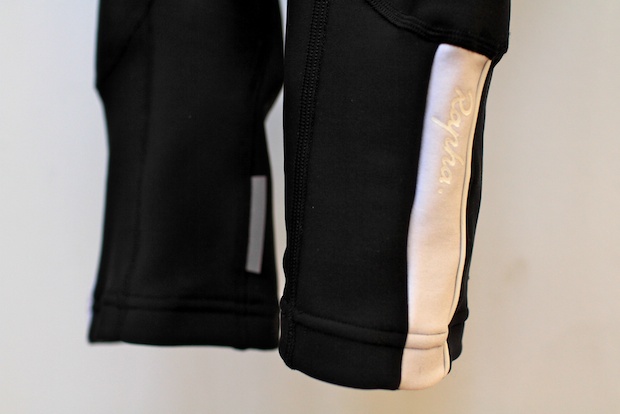
The 3/4 bib shorts are perfect for rides below 40º. They're lined with a fleece-backed Thermoroubaix fabric. I prefer this length to full on tights.
Halfway into my ride, near Coney Island my shifting started to act up. Upon closer inspection my rear derailleur cable stop inside the shifter came loose, forcing me to ride in my 11 tooth cog. What's worse is that my drivetrain is so worn down that cross-gearing from my 39 tooth chainring would skip all over the place. I rode all the way home in my highest gear, beaten by the cold with stumpy frozen fingers. Surprisingly I finished in good time.