Power to the People

So lately I've been curious about power meters. I understand their advantages over other methods of tracking efforts and training, but most of the options available are way too expensive, costing anywhere from $600 to $3,000. There are crank based meters, pedal meters, hub, and even heart rate based power meters. They're such an investment I want to make the best informed decision possible.

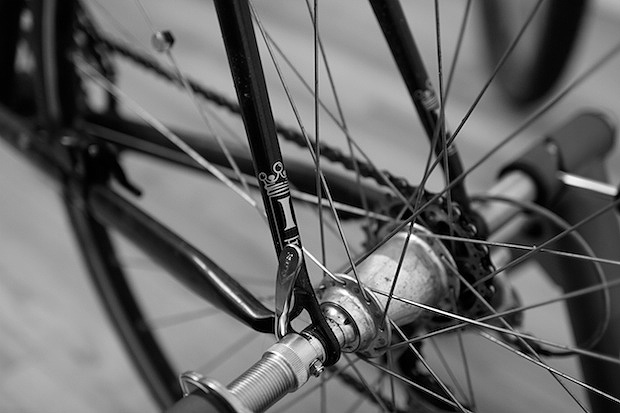
Garmin is coming out with their Vector pedal based power meter this march, but that would require me to buy another set of road specific shoes. Quarq and SRM make crank arm solutions, but they're expensive and would take away the classic and understated look of my bike. CycleOps offers hubs that seem fairly reasonable with the least amount of set up, granted that I know how to build wheels.

Is it too much to go through all the trouble of having to build a new rear wheel, and probably upgrading my Garmin watch to a computer? Well, I'm beginning to understand my limiters in cycling, and heart rate based training can only take you so far. In observing efforts through wattage there's nothing more absolute and accurate. Ultimately, I think I could train better with a power meter.

In the meantime I'll be researching different setups and components, their advantages and disadvantages. If you have previous experience with any of the above mentioned systems I'd love to get your feedback.

Another Blast from the Past

My first real mountain bike was a chromoly Specialized Stumpjumper from REI. It had a custom Rock Shox air/oil front suspension fork and a Shimano LX groupo. I gradually customized it with a Gorilla brake booster and Bear Trap pedals amongst other unnecessary upgrades. It was a great starter bike.

I tore it apart and put it back together again, stripping bolts along the way. I borrowed Sloane's New Bicycle Maintenance Manual from the library and absorbed as much as I could. It's how I got into becoming a bicycle mechanic.

My dad snapped this shot of me, just as we descended the Dog River trail near Mt. Hood. It was one of my first group rides with my local shop, Custom Bicycles, who eventually became my first employer. I was sporting my dad's old Nike running shoes because they were so spongy and gripped so well with my pedals. I also had on a pair of protective shop glasses. Talk about performance on a budget.

Saddle of Choice

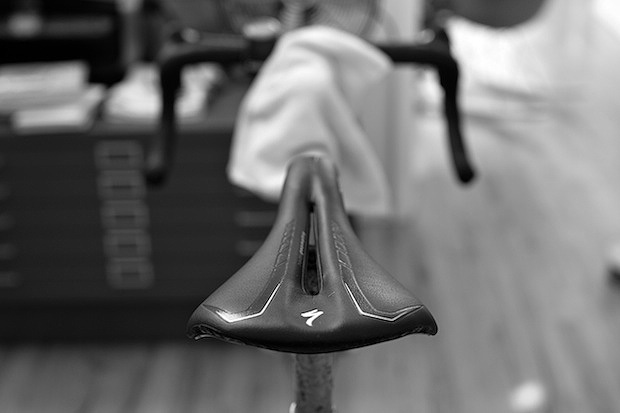
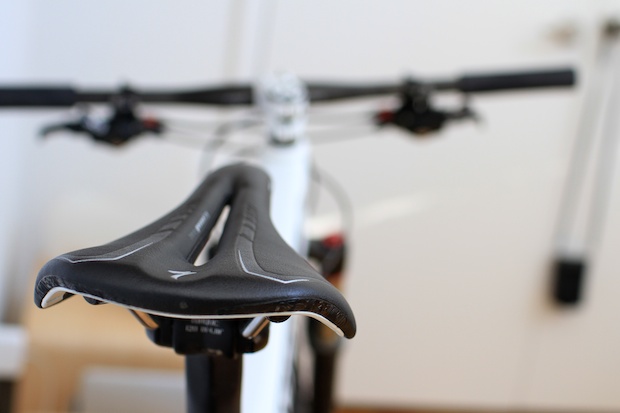
I'm riding Specialized's Phenom saddles, chromoly railed on my mountain bike and carbon railed on my road bike. I first tried this saddle out on my earlier mountain bike and found it to be super comfortable. Before I even had a mountain bike this year I was riding a Brooks titanium Swallow on my road bike, which is really nice, but I wanted to have a consistent setup across two very different bikes. So, if you're interested, I have a highly coveted saddle for sale.

Before I was on that Brooks Swallow I rode an older Selle Italia Flight for years. I will never go back. While extremely light, the Selle saddle was way too narrow and uncomfortable on rides longer than an hour, road or mountain. I also rode on an older WTB saddle, the one with a wide rear and pronounced curved nose. That was really comfortable, but not as light or as maneuverable.

The Phenom was engineered in Specialized's Body Geometry lab to relieve problems of soreness and numbness, hence the center cutout and width options. The carbon railed Phenom Pro also takes the edge off of road bumps while lightening my bike a tad. The overall shape provides just the right amount of support without digging into my legs, as well as the ability to slide off the back in really steep and technical descents.

CycleOps Trainer

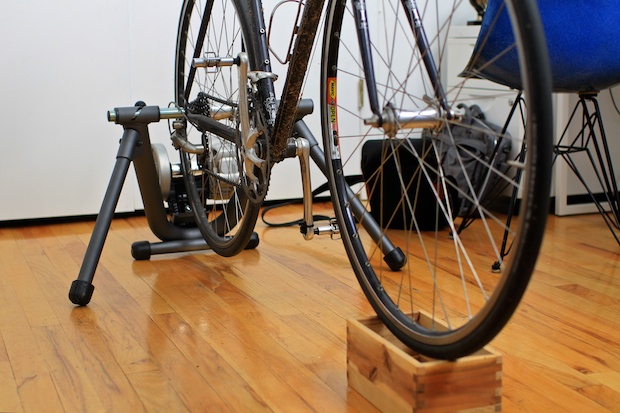
I picked up this CycleOps fluid trainer in late November. It took me a while to get used to riding indoors. The technique is so different that takes some time getting used to it. There are so many advantages to indoor training that make up for its awkwardness; controlled intervals, shorter workouts, less wear on your bike. However, it's not without its faults, chiefly staring at a wall for two hours, yet somehow I think even that's essential for endurance racing; mental endurance.

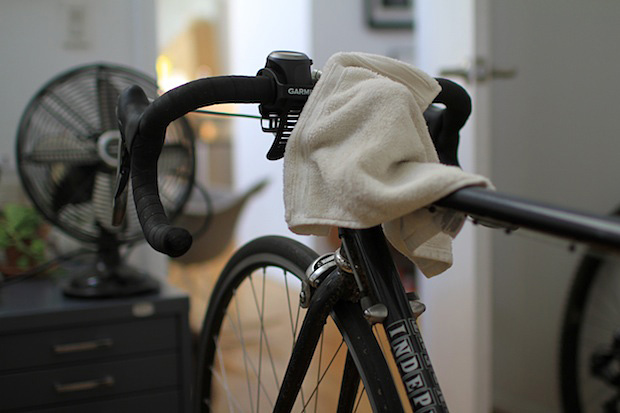
One of the major issues with training indoors is staying cool. It's easy to overheat since you're not fighting the wind anymore, which naturally moderates your body temperature. I have a huge fan at full blast pointed at me for this reason. Because you sweat more I often wear a sweat-band and have a towel draped over the handlebars/top tube of my bike.

Resistance is also different in that you no longer have gravity to fight against. As a result, workouts seem way harder since you're no longer coasting and pedaling to maintain speed the same way. You have to pedal constantly, which is great for developing pedaling technique.

I've also noticed that it's harder to maintain and reach certain heart rate zones without feeling completely obliterated. I'm not sure why this happens, but maybe it's because the amount of resistance is refocused to leg work since your body doesn't have to work as hard to keep up. This actually got better as I continued to use the trainer in my workouts.

The yellow tab is the resistance adjuster. It modulates how much pressure the roller has against the tire. I had mine set up with too much pressure/resistance. I eventually dialed it back so that the easiest gear on my bike was easy, maintaining constant pressure without spinning out.

Compared to a wind and magnetic trainer it provides more natural feeling resistance without the noise. I was curious about rollers, but needed to find something that was portable. This model folds up and packs away easily into our closet.

A wooden planter's box does the job of making the setup level and secure. A few books or a phone book can do the trick, too. CycleOps sells a wheel stabilizer/lifter, but I don't think it's that necessary.

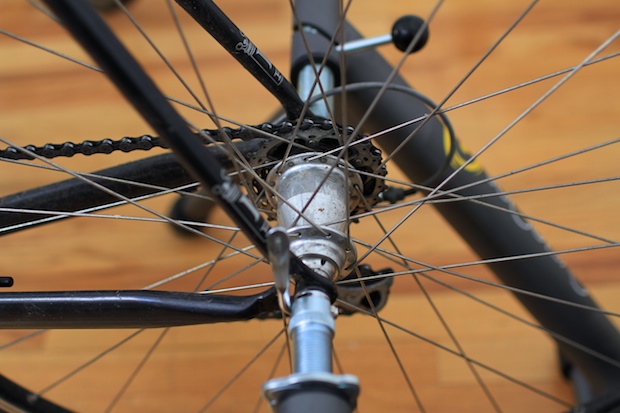
Attaching the bike is quick and easy once you set up spacing correctly. There's a quick release lever on the opposite side that's designed to stay secure even if you're standing up and mashing on the pedals. The entire unit feels solidly built and has the weight to prove it.

Now, towards the latter half of December, I feel pretty comfortable in putting in miles when the weather turns for the worse. No more excuses.

A Too Many Bikes Solution

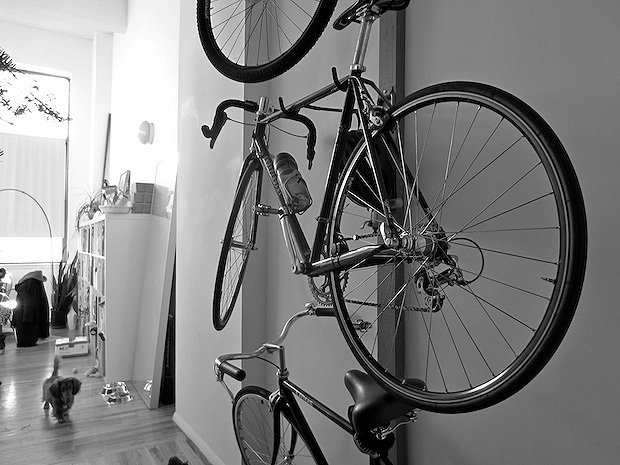
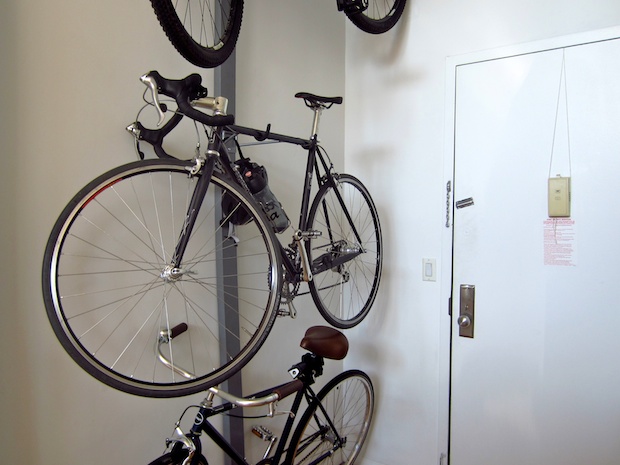
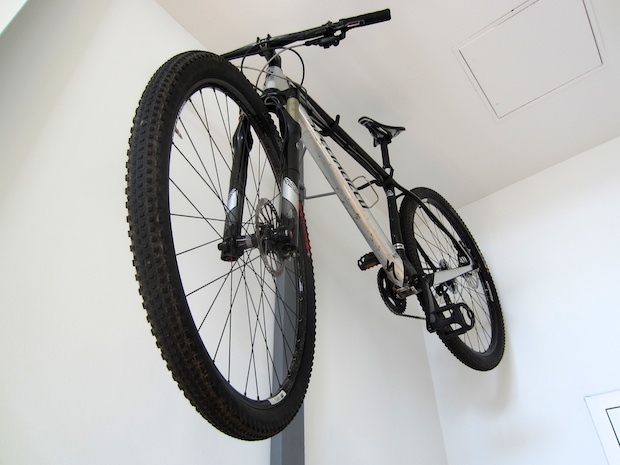
I don't know how it happened, but we now have four bikes between the two of us, three of which belong to me. Fortunately, we have really tall ceilings, but the offerings of decent looking wall mounts for bikes is very slim. So I decided to make my own. The result is quite nice and pretty inexpensive.

I picked a long 2"x4"x8' plank I picked up from Lowes, which happens to be a few blocks away, and bought these brackets on Amazon but in grey. I picked up a small quart of matching paint and painted the 2"x4". This step made all the difference in aesthetics. Since all the weight is distributed along the entire length of the 2"x4" all I need to do was secure it flat against the wall and bolt the mounts onto the plank. I used elfa wall anchors from The Container Store which do a great job without much worry of pulling out of the drywall. My last wall mount came crashing down, putting a nice big dent in my road bike. Luckily the frame is made from steel, and dents like that add character, so I tell myself.

The hardest part of the whole project was figuring out exactly where to put the mounts. We have enough height to stack three bikes, one way up high, in the middle and the last leaning against the wall. The only drawback is that the bike up the top is a bit high to reach without a stool or chair. I also picked up some hooks for hanging helmets and locks. The end result is something quite minimal and modern.

Jersey Contents

On any given ride I'll try to take the least amount of stuff in my jersey/jacket pockets. Above are my go-to items. On longer mountain bike rides, especially if it's hot, I'll bring along my CamelBak Lobo, and pack it full of food and the all important 8-hour bug spray. The Northeast has some of the worst bogs and consequently the biggest mosquitos I've ever seen. See what I bring after the break.

Topeak Race Rocket It's super compact, with an extendable hose, which makes pumping a lot easier. It's Presta and Schrader valve compatible. It also goes up to high pressure in no time at all. Great design.

Park Multi Tool Has just about everything you'd need for minor to reasonably major repairs. It features a chain tool, tire lever, spoke and hex wrenches. I'm only complaint is that the 8mm hex bit falls off from time to time.

Park Super Patch No glue, or waiting, and reliable most of the time.

Rapha Essentials Case Good for keeping wallet items dry including my iPhone.

Bicycle Permit It costs $5 for life, and allows you to bring your bike aboard Metro North and Long Island Rail Road.

Cash Even $1 can save you on any given ride. I can usually buy either a Snickers bar or 3 bananas.

iPhone

iPod Shuffle Good for training rides around the park. I normally don't listen to music on long rides. I think it's dangerous. The park is fine since there are fewer distractions to be mindful of.

Canon PowerShot Elph 300HS Great little camera that's easy to handle while riding.

Garmin Forerunner 405 While technically it doesn't live inside my pocket, it's as essential to me as a helmet. Here's a previous post about the watch.

Real Wheels

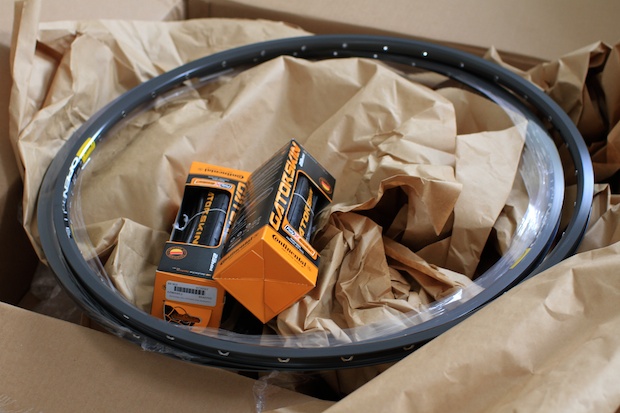
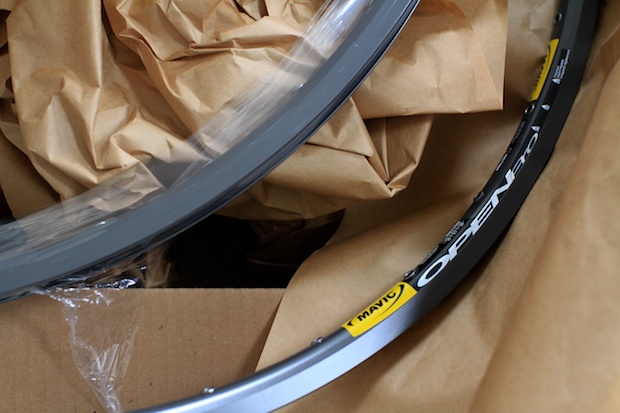
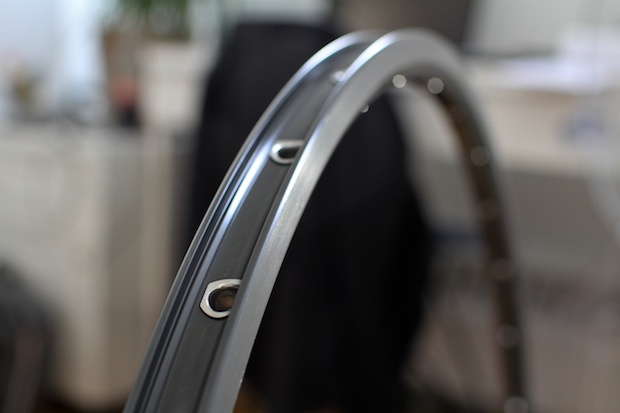
I just got my new Mavic Open Pro rims in the mail the other day. These feature the Couche Dure micro hardening process for more durability and better brake wear. I've been on my original Open Pro's for close to ten years now without a hitch. I hand-built them myself, paired with Chris King's Classic hubs and DT Swiss double butted spokes with alloy nipples.

It's been so long since I've built up a pair of wheels, even though this is a simple rim swap. I own a truing stand, but it's Park's Home Mechanic economy model. I don't own a dishing tool or a tensiometer, but I think I'll get by. Luckily one of my neighbors has a plethora of tools I can borrow.

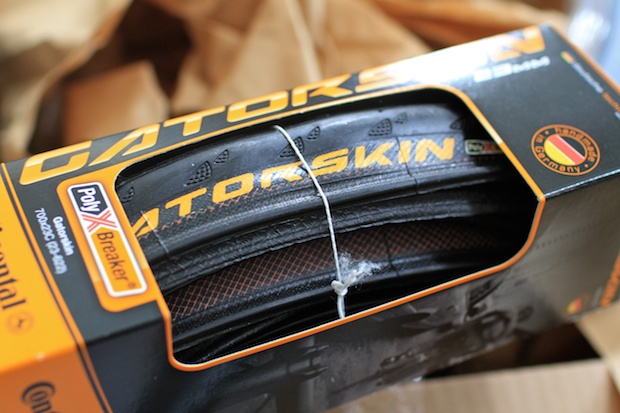
I also got some new tires, tubes and brake pads.

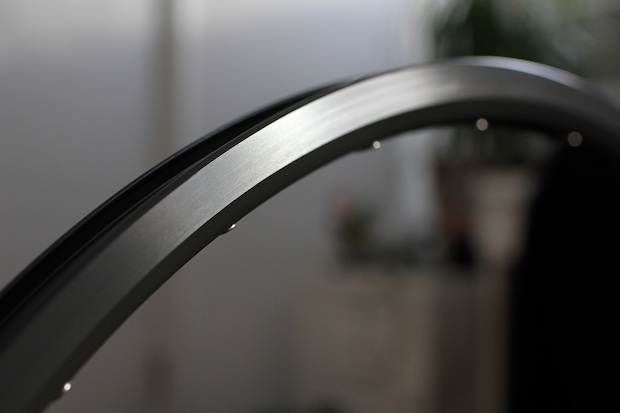
The Open Pros have a gorgeous machined sidewall.

Reinforced spoke eyelets.

Gatorskin tires from Continental are made in Germany, and are supposed to be really durable. My Michelin Pros are tried and true, but just don't hold up to the nasty streets of New York.

I don't know when I'll be able to build these up. We're heading out-of-town for the holidays, and I'm bringing my bike with me along with my trainer. I'd rather risk riding my old wheels for just a week more than have no wheels at all. I'll let you know how it goes.

Blast from the Past

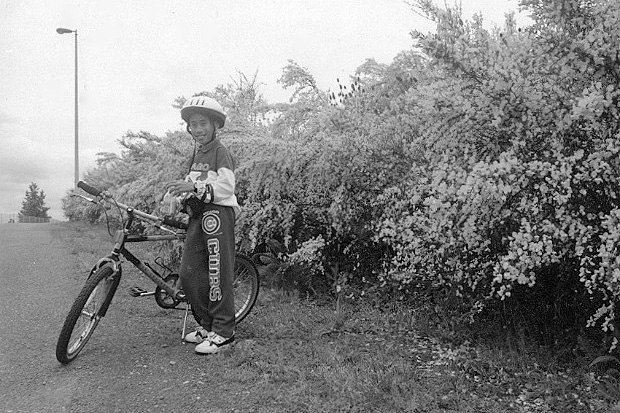
My dad is the real reason I got into cycling. He taught me how to ride when I was five, and we went everywhere. He used to tow me with a bungee cord whenever I couldn't make it up the hills. That's until I got this bad boy. I don't remember what brand it was, bit it had real brakes and more importantly, gears. I have a lot of relatives that live in Chicago, hence the head to toe Chicago Cubs threads. I don't even know how I old I am in this picture. All that matters is that I'm clearly having a blast. Maybe this was the first I made it up without my dad's help. Regardless, thanks dad.

Feel My Heartbeat

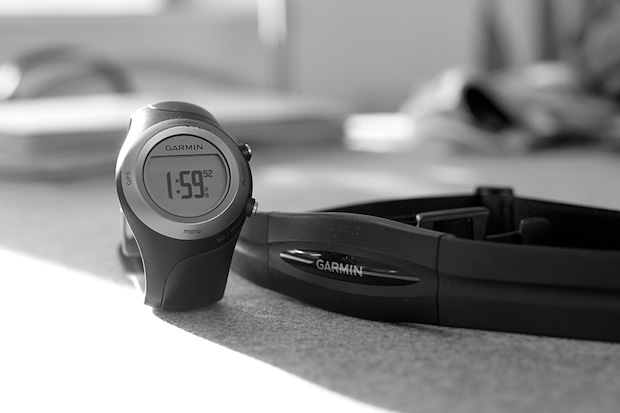
I've been using this Garmin Forerunner 405 watch to track all of my rides. I decided to go with this rather than a traditional bar/stem mounted computer because it's easier to swap between bikes since it uses GPS rather than a mounted sensor. It's a running watch, but it has a cycle mode with a lot useful features. I bought mine from eBay for $150.

Beyond tracking how far or how long I've gone I learned how to track how hard I've gone. The built-in heart rate monitor, which is probably the most important aspect of training, gives you a number of ways to show how hard you're working. Heart rate monitors are great because they aren't too expensive, but a clear understanding of heart rate zones in conjunction with a rated perceived exertion scale (RPE) and a solid year-long plan is necessary to get the most out of it. The next best thing would be a power meter, which calculate wattage output, but they can cost well beyond a thousand dollars.
The bezel surrounding the face is similar to that of the ring of an iPod. It's touch capacitive, while not as sensitive. It's pretty easy to cycle through customizable screens while riding. Above is the watch with the handlebar mount. It's rather bulky but super easy to mount. It came with zip ties, but I just cinch the strap of the watch down to hold it in place.

The watch also features a cadence sensor and speedometer (sold separately), but it's worth it's definitely worth it to me since I use a trainer and GPS is useless if you're not going anywhere. My only gripe is that it uses zip ties to hold everything in place. It starts to look rather clunky, but gets the job done.

The Forerunner isn't perfect. For normal rides it's great, but sometimes abnormal happens. It holds a battery charge of up to five hours. I often have to charge it every other day. Sometimes my rides spill over five or more hours, and I end up calculating the halfway point to get my total distance. While Forerunner is water-resistant it sometimes has a mind of its own when a drop of water falls onto the touch sensitive bezel.

On longer rides I usually carry my iPhone with me in case something happens. Garmin just released this great app called Garmin Fit a couple of months ago. You can even get an adapter so you can use your heart rate monitor strap. I use this app whenever it's a long, dry day of riding. I've used the Nike+ app to track my rides before I got my Garmin, but on rainy rides my phone starts acting up due to moisture. Also, you can't view your stats as you ride unless you got one of those ridiculous looking iPhone mounts.

What I love most about the whole Garmin setup is the website it wirelessly backs up to. Garmin Connect, out of all the ride tracking sites I've tried out, besides Strava, has one of the better interfaces and tools. Here's an example of a ride I did the other day. It's very clean, detailed and provides an endless amount of information. The visualization of information is nice, too. It integrates your choice Google or Bing maps, which is useful for sharing your route or planning new ones. You can even program and upload customized workouts to and from your Garmin device.

Don't get me wrong, I'm not entirely consumed by numbers and results, but it's been harder for me to walk out the door without my Garmin. For me cycling has gone beyond pure recreation and fitness into something more dedicated and serious. In its own twisted way it's become more fun, reaching the outer boundaries of my own limits.